

2 OCTOBER 2026
Welcome to this week’s edition of Culture Wire, a newsletter brought to you by Singapore-based pop culture and lifestyle marketing agency Culture Group.
In this week’s edition:
- Headline of the Week: Gen Zs are keeping third spaces real
- Fax, No Printer: How is a Japanese convenience store attracting workers?
- Before You Leave: Bookstores, boy bands, Meta’s modern Tamagotchi
Headline of the Week
🛋️ WE SHOULD HANG SOMETIME
It’s tempting to brush aside the term “third space” as overmarketed, but Gen Z’s search for casual venues and low-stakes community continues to spread and evolve. Brands are 100% invested, as we’ve covered in previous reports, from programs that herd hobby enthusiasts together to drum up coffee sales to more branded cafés than you’ve ever dreamed of. But does the scale of investment match the kinds of experiences Gen Z actually needs?

💡 OUR TAKE
Needless to say, the answer depends on a brand’s KPIs and overall objective. But across Southeast Asia, we’re seeing a much broader spectrum of needs, with multiple forms of third spaces emerging to meet them.
Do you want to hang out in a recreation of someone’s living room and simply be around other people, without the formal KPI of making new friends? Singapore has you covered. Are you a fan of traditional Thai floral garlands known as malai radklao? You too can help liven up a previously quiet flower market in Bangkok, Thailand. Or do you just want to hang out under a bridge and people-watch? Head over to Ho Chi Minh City, Vietnam. In the Philippines, there’s a plethora of Gen Z-coded weekend events catering to all kinds of hobbies, from silent reading clubs to mahjong and journaling sessions. Indonesian Gen Z’s are hanging out to play padel and pickleball.
This cohort wants places to hang out, yes, but the bigger need is for IRL social connection on their own terms. After Hours, Slow House in Singapore doesn’t hit you over the head with newspeak about making doubleplusgood friends. Instead, it promises “soft moments.” You can arrive with the goal of studying by yourself, strike up a conversation with a tablemate and end up splitting a takeout order. Or you can knit peacefully in a corner. Attendees may not want to be alone, but in the words of Carrie Bradshaw, they can be “on their own” without judgment in a roomful of people.
Handicrafts are another strong draw, as Gen Z increasingly seeks out analog experiences involving art and design. Weekend bazaars feature products for sale, but also spotlight local artists, street fashion, photo spots and even professional photographers capturing market-goers. The most popular bazaars have undeniable vibes, perfect for aura-farming. There’s a distinct rebellion against templated commercial malls as people of all ages flock to these more tactile, multisensory pop-up experiences.
At the other end of this spectrum of curated offline experiences is the superfan experience. These can range from VVIP front-of-stage access to small-group meet-and-greets with talent. K-pop group ENHYPEN has an upcoming Cafe Experience in Manila with Dunkin and Shopee for an intimate group of just twelve fans, with access secured through promo and raffle mechanics. The Spotify x BTS: SWIMSIDE fan experience, exclusively for select Spotify Premium members, first took place aboard a literal cruise in Seoul earlier this year and has since toured Manila and Jakarta.
So, is the answer for brands to launch listening parties, like Miu Miu just did with its Vinyl Clubs, following its previous Literary Clubs?
Not necessarily.
It’s already a crowded landscape. Our guidance is to be particular about what kind of connection your customers actually want. Bigger doesn’t automatically mean better; a smaller, lower-pressure gathering may create more meaningful participation than another elaborate branded “third space.”
When every brand wants to build a third space, the opportunity isn’t simply to give consumers somewhere to go. It’s to understand how they want to be together once they get there.
Fax, No Printer*
For those of you born before 1997, ‘fax, no printer‘ is Gen Z speak for ‘undeniable facts I agree with’
Who is FamilyMart’s new recruitment ambassador?
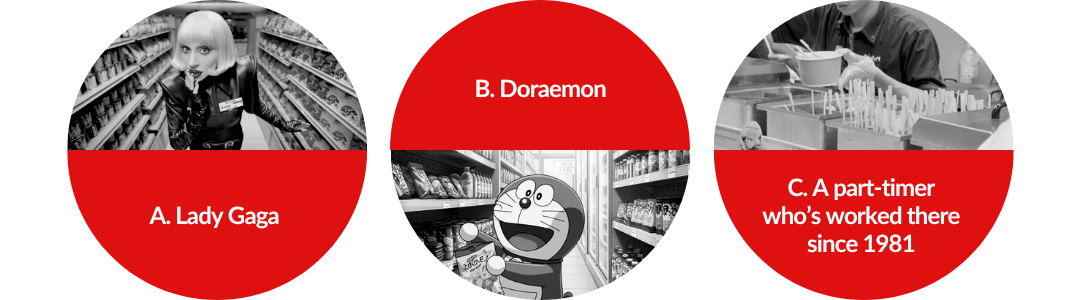
Scroll to the end of the newsletter for the correct answer!
Before You Leave





This Week's Trivia Answer
A. Lady Gaga
Mother Monster has clocked in. A 30-second spot, launched to mark FamilyMart’s 45th anniversary, shows the global star restocking shelves, mopping floors, handing out Famichiki and strutting past two android-looking versions of herself. “Want to work at FamilyMart?” she asks in Japanese.
Franchise owners across Japan hope the answer is yes. The country’s labor shortage has made recruiting harder for its convenience stores, or konbini, where low wages, overnight shifts and strict appearance rules can put applicants off. The FT reports that FamilyMart is advertising 10,481 part-time vacancies across a network of 16,455 stores. As job-seekers gain leverage, rival chains are chasing the same applicants – although few have gone quite so far up the charts to find a recruiter. A researcher at the Distribution Economics Institute of Japan told the FT that it’s probably the first time a konbini has used a celebrity to promote working there.
FamilyMart has spent this year trying to become more fashionable, opening a NIGO-directed flagship and debuting its first new staff uniform in a decade, which includes a T-shirt by Facetasm founder Hiromichi Ochiai. In the ad, Gaga puts her own twist on the uniform, combining leather with striped socks and vertiginous heels. Staff are also getting more freedom over their appearance: new rules let employees choose their own hair color and layer their own clothes under the uniform, while Muslim staff are formally permitted to wear hijabs.
Customers aren’t the only ones sizing up a brand. Potential employees are too, and in a tight labor market, how a company looks to them is important. FamilyMart is attempting to make convenience store roles more appealing through policy changes, and the addition of global celebrity will help amplify the reach of job ads, ensuring they go beyond those actively seeking work. The campaign ran on national TV, and for two days FamilyMart’s in-store screens showed exclusive footage of Gaga.
The catch is that an ad can only get people to apply. Once they’re hired, it’s the job itself – the hours, the pay, the manager – that decides whether they stay. If a potential hire saw your last campaign, would the job behind it live up to the pitch?
🚀 Over and Out!
Pop culture insights are better when shared. Subscribe, forward this on, or share the love on social media. Thanks for reading!
Your Culture Mavens,
Angela, Twila, Helena, Teri, & Vicki