
13 NOVEMBER 2026
Welcome to this week’s edition of Culture Wire, a newsletter brought to you by Singapore-based pop culture and lifestyle marketing agency Culture Group.
In this week’s edition:
- Headline of the Week: Handmade holiday campaigns meet AI
- Fax, No Printer: How do you scare doctors in Thailand?
- Before You Leave: What’s moving culture across Korea, Japan, China and Thailand
Headline of the Week
✋ IT’S BEGINNING TO LOOK A LOT LIKE AI
Picking up a thread from the last festive season, luxury brands have gone all in on handmade for 2026 holiday campaigns. Prada was first out of the gate with Drawing Prada: Animated by Hand, which depicts a winter wonderland populated by hand-drawn creatures alongside live-action footage of actors including Chen Haoyu and Sadie Sink. The animations were created by veteran Disney animator John Pomeroy and his team.
Many other brands answered the handmade brief too, with Loewe teaming up with Tim Burton on a Nightmare Before Christmas collection drawn from the director’s archive of original sketches and puppets, and Strathberry delivering felt stop-motion films that combine cute and cosy 🐭.
And then there’s Dior. The house debuted Night in Color, a six-minute short from The Triplets of Belleville director Sylvain Chomet that was described by creative director Jonathan Anderson as ‘all hand-drawn using techniques that go back to the 1940s’. So far, so on theme… until viewers started calling out visual glitches (six-fingered hands and warped lettering), suggesting generative AI had been used during production. Chomet has since acknowledged that software filled in some frames while maintaining that the artwork itself was drawn by hand. At the time of writing, Dior has yet to comment publicly. So what does this controversy tell us about audiences and AI?

💡 OUR TAKE
Computers have helped animators move hand-drawn characters between poses for decades, and few people would call a film made that way anything other than hand-drawn. The sticking point is the word ‘all’. The luxury industry has always treated ‘handmade’ as a sliding scale, but by making craft the main event, Dior invited viewers to look closely, and when they spotted something odd, they wanted answers. The Tourism Authority of Thailand learned this too, after a shot of Blackpink’s Lisa drifting across Udon Thani’s Red Lotus Sea was so widely branded AI that TAT moved to clarify it was a real photo enhanced with CGI. (The memes didn’t hurt: visitors flocked to the lotus sea anyway.)
Of course, the people doing the finger-counting are unlikely to be AI refuseniks. Consider that ChatGPT now handles a fifth as many ‘search-like queries’ as Google, according to OpenAI’s consumer product lead. It’s likely that the Southeast Asian viewers who spend close to 40 minutes a day in short-drama apps are consuming some AI-created content: in China, the format’s biggest producer, more than 95% of the new microdramas released in Q1 2026 were reportedly AI generated. Microdramas, and the revenge plots and secret-billionaire romances they center on, are the equivalent of emotional comfort food. And perhaps most importantly, no microdrama has ever promised prestige TV.
Another place AI usage is often called out is menus. Diners that have little appetite for AI-generated food photos, which are, after all, a promise about what will be delivered to the table or door. When Filipino chain The Old Spaghetti House was accused of using AI-generated posters, critics zeroed in on the suspiciously smooth bread and oddly shaped meat (yum). As we wondered when China’s first fully AI-generated film flopped at the box office, maybe the real issue is AI that’s bad enough to notice.
Using AI and feeling comfortable with it are two different things. Nine in ten internet users in Singapore used an AI tool in the past month, but just one third say they feel comfortable using the tech (and 84% want AI-generated content to be clearly labelled, according to a separate survey). As the microdrama boom illustrates, AI will help brands make more content, faster. The advantage lies in knowing what’s worth making and who it’s for.
The more craftsmanship, flavor or experience a piece of content promises, the more it has to live up to. As AI becomes standard in the marketing toolkit, the edge goes to brands with the cultural intelligence and readiness to know where it earns attention and where it costs credibility. Do you?
Fax, No Printer*
For those of you born before 1997, ‘fax, no printer‘ is Gen Z speak for ‘undeniable facts I agree with’
How do you terrify a doctor in Thailand?
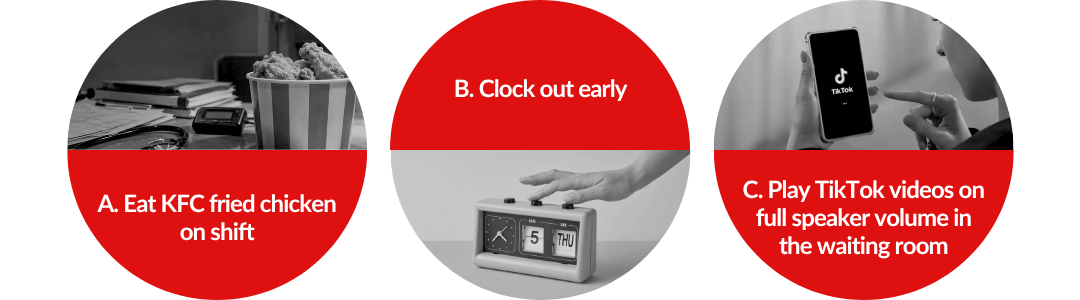
Scroll to the end of the newsletter for the correct answer!
Before You Leave

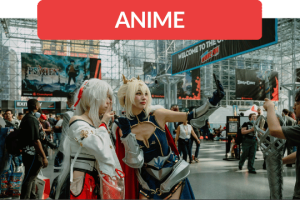
The World Can’t Get Enough Anime
(8 mins)


This Week's Trivia Answer
A. Eat KFC fried chicken on shift
Fried chicken, beloved by the world and especially Southeast Asia, takes on a different tone for busy healthcare workers in Thailand. It is anathema for doctors and staff to consume KFC-branded fried chicken while on the clock in hospitals, due to an entrenched superstition that this will lead to longer shifts.
Risky foods are common amongst hospital staff across the region, as steamed buns ‘baozi’ in Singapore and noodles or pancit in the Philippines also achieve the same ‘toxic’ effect when imbibed during on-call hours on-site: a lot more work. Each hospital or institution may also have their own unique food item that’s taboo, as staff in one hospital in Thailand will even shun bananas.
As the largest chicken QSR chain in Thailand, KFC embraced the quirky tradition with limited edition packaging to nullify the curse and also celebrate Doctor’s Day in November 2024. The campaign was popular, perhaps because it also heroed the appreciation of healthcare workers. It may even serve as a case study of a brand making the most of a localized trend that it has little control over.
The high-water mark for a branded product is when people actually mean your brand when they refer to the generic product, as fried chicken in Thailand may be synonymous with KFC due to its popularity and entrenched status in popular culture. Also notable for Thailand – Jollibee is not in the market, as it enjoys outsized recognition in the rest of Southeast Asia.
We always appreciate when brands smartly navigate local trends and preferences. Due diligence and stress testing are key, as even local know-how cannot always sure-fire guard against cultural snafus (like the recent cases of Lululemon in China and Starbucks in South Korea).
🚀 Over and Out!
Pop culture insights are better when shared. Subscribe, forward this on, or share the love on social media. Thanks for reading!
Your Culture Mavens,
Angela, Twila, Helena, & Vicki