

29 MAY 2026
Welcome to this week’s edition of Culture Wire, a newsletter brought to you by Singapore-based pop culture and lifestyle marketing agency Culture Group.
In this week’s edition:
- Headline of the Week: From fake posters to real engagement, post-viral culture is getting real
- Fax, No Printer: A social media app goes analog
- Before You Leave: Dimsum, dating fatigue, and the World Cup marketing race
Headline of the Week
🌀 ESCAPING THE CLIPPING MINES
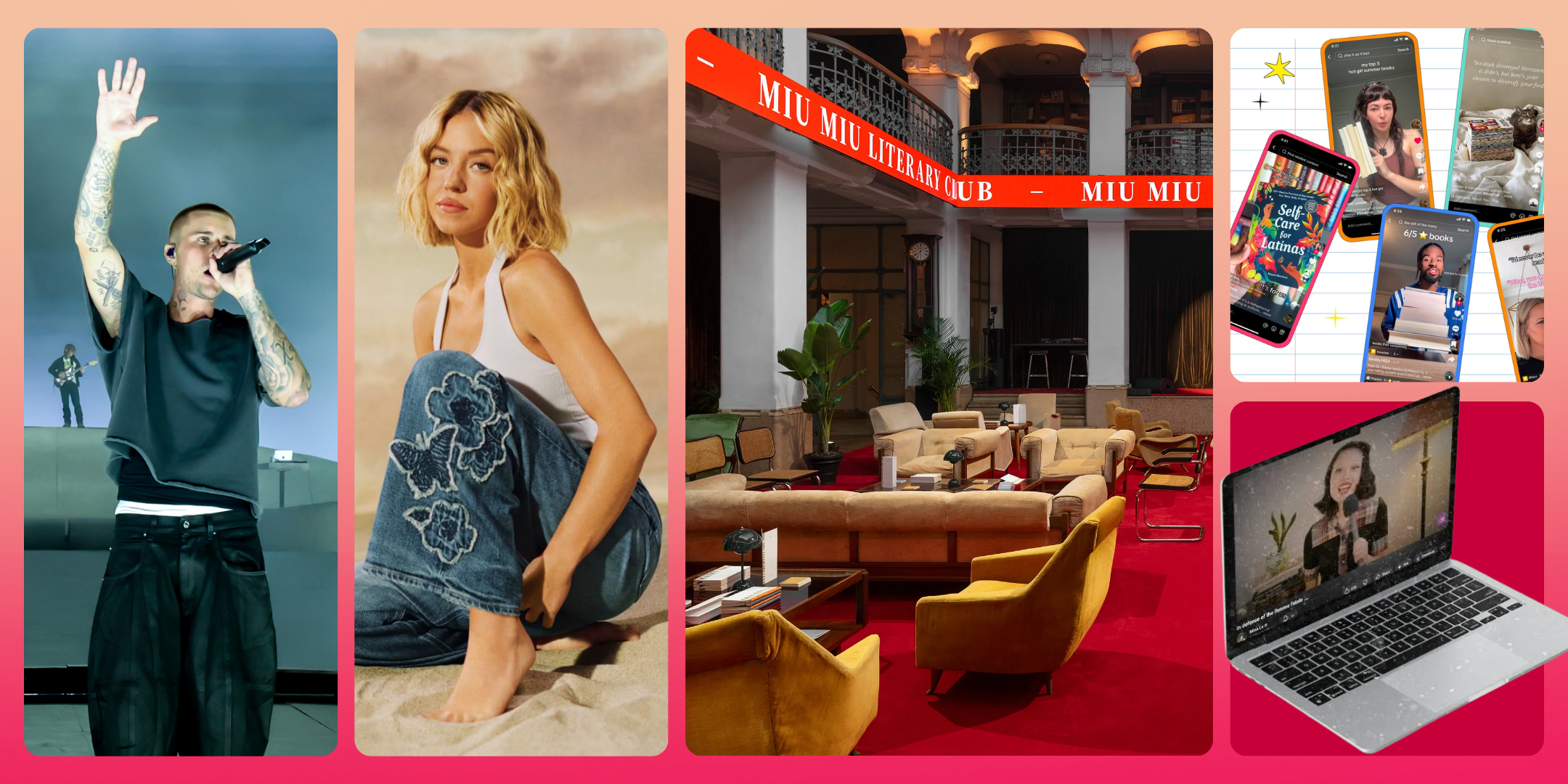
Is anything you see online real anymore? From the excitement surrounding Justin Bieber’s performance at Coachella to the backlash against Sydney Sweeney’s American Eagle commercial, there is evidence that a significant part of the discourse was inorganic and manufactured.
Synthetic hype isn’t just limited to chatter about pop stars and Hollywood actors. That Reddit thread about sunscreen brands? The debate around the latest bestsellers on BookTok? A good deal of it may actually be covert advertising, versus actual discussion in a healthy community. If everything online is dismissed and distrusted as marketing slop, it becomes harder and harder for brands to build quality connections with consumers.
💡 OUR TAKE
Clipping has upended social media. This refers to the now seemingly ubiquitous practice of hiring third parties to turn your content into bite-sized pieces that are then posted and shared by a network of accounts (that often turn out to be created for the sole purpose of content distribution). “Narrative campaigns” form the next step—artificial comments and opinions are planted to resemble authentic consumer banter.
The previous high-water marks of digital marketing, maximum views and engagement, can now be so juiced that brands are trying to step away from -maxxing in order to differentiate themselves. “Going viral” is no longer the end all be all, as brands think about how to build long-term relevance, credibility, and genuine loyalty.
One avenue that brands are investing in is long-form content, especially via YouTube. Passive scrolling and the trend-base algorithm exacerbate digital fatigue, reportedly felt by 58% of Gen Zs and 54% of Millennials in Deloitte Global’s recent Gen Z and Millennial Survey. Long-form allows brands to communicate with more nuance, and take advantage of a longer effectiveness tail where brand integrations have a longer shelf life instead of disappearing after 24-hours.
Even the quality of SponCon can hit different, as long-form content allows for more room for storytelling. Creators can speak with genuine appreciation for a brand or product in a longer video essay without being immediately dismissed. YouTube has tools that identify creators organically mentioning brands, improving the match-making with advertiser needs.
Brands are also expanding what they do offline. As it becomes harder to distinguish between a flesh-and-blood netizen versus a bot account, people look to IRL events to build emotional connection, and authentic fandoms. As we previously covered on Culture Wire, brands recognize the power of community-building in these spaces, where consumers are choosing to invest their time, dollars and social ties. Literary salons by fashion houses such as Miu Miu offer the opportunity to signal shared identity and interests with real people. Prime Video announced Obsessed Fest, a convention centered around its new slate of streaming content based on Young Adult IPs.
Online, anything is now table-stakes or just plain homogenous. As the attention economy continues to evolve, brands need to be more creative than ever and truly think end-to-end to build lasting power with consumers.
Fax, No Printer*
For those of you born before 1997, ‘fax, no printer‘ is Gen Z speak for ‘undeniable facts I agree with’
Which social media platform asked users to respond to a creative prompt then published the results as a physical book?
Scroll to the end of the newsletter for the correct answer!
Before You Leave


This Week's Trivia Answer
C. RedNote
After nearly 4,000 people across 44 countries responded to an open call to document 19 September 2025 in their own language, RedNote compiled 34 entries into a physical book. Day in the World (世界的一日), which includes contributions from both established writers and first-time authors, was celebrated at an event in Beijing and accompanied by short films with select contributors reading their entries.
Most platforms—and most brands—go broad with open calls to maximize participation. RedNote went the other way, and the resulting output transcends shared interests or demographics and instead centers around shared time.
The published book is also a physical manifestation of the platform: RedNote’s 400 million users post over 100 million words every day and the first writing contest (which took place in 2024) drew 12 million words from over 10,000 authors and produced a published book that charted on Douban and Weixin Reading. Now a formal publishing program with 30 partners and backed by the Chinese Writers’ Association is targeting 100 platform-incubated books over the next three years.
Southeast Asia is RedNote’s second-largest market outside mainland China—Malaysia’s tourism board is partnering with the platform—and since the 2025 TikTok ban scare saw a wave of international users sign up, it’s been working to shrug off the ‘Chinese lifestyle app’ label. Shifting into publishing formalizes behavior that was already happening on the platform, with nearly 400 RedNote users graduating from posting to publishing books, supported by a fanbase built on the platform. RedNote is evolving with the community and backing what they are already doing, rather than designing something for it.
In an attention economy that rewards disposability, RedNote is thinking about permanence. Time for your brand to make its community’s work longer lasting rather than more shareable?
🚀 Over and Out!
Pop culture insights are better when shared. Subscribe, forward this on, or share the love on social media. Thanks for reading!
Your Culture Mavens,
Angela, Twila, Crystal, Helena Teri, & Vicki