

30 OCTOBER 2026
Welcome to this week’s edition of Culture Wire, a newsletter brought to you by Singapore-based pop culture and lifestyle marketing agency Culture Group.
In this week’s edition:
- Headline of the Week: Netflix is winning the numbers game. But what about culture?
- Fax, No Printer: What are young people in China putting up for a public vote?
- Before You Leave: Flexing looks a little different lately
Headline of the Week
📺 IT’S A HARD KNOCK LIFE
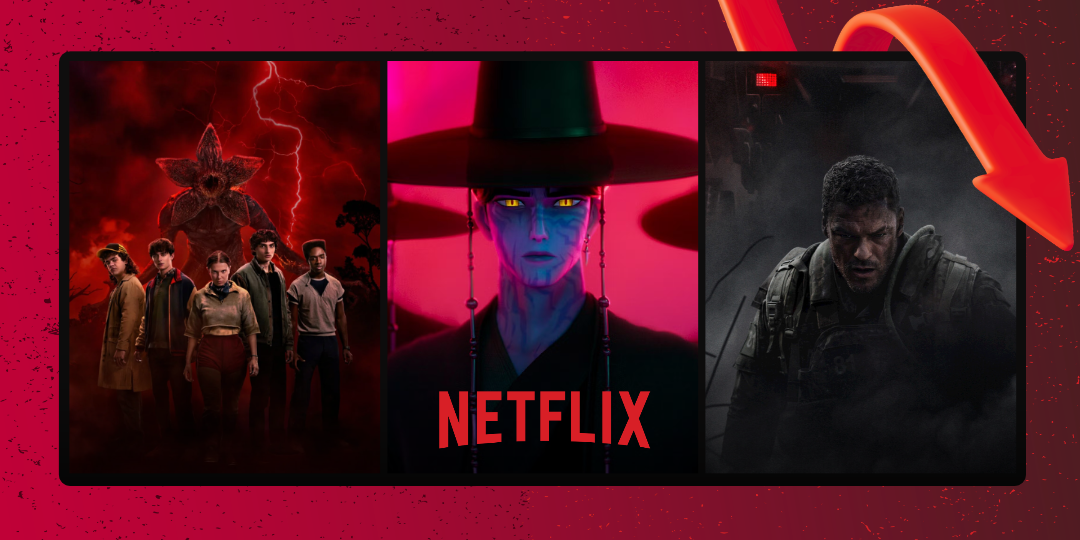
Is Netflix now 2000 and late? Latest reports cite potential harbingers such as the streamer being outgunned at the Emmys, layoffs and the high-profile ejection of key executives. Signs of cultural decay may also be found in its glaring K-Pop Demon Hunters or Stranger Things-sized hole, the lack of a juggernaut hit that sparks the proverbial water cooler discussions all streamers unofficially look to as a North Star metric.
Owning a space in the cultural zeitgeist is a fickle KPI, where big numbers might not always equate to being talk of the town. In this attention economy, country singer Ella Langley’s Choosin’ Texas can break records with 24 weeks on the Billboard Top 100, but guy-on-the-street interviews reveal that many people have never heard it nor of her.
Netflix’s third quarter results met corporate expectations, but there are concerns about the US market (Netflix’s largest) in particular with lower view hours and increased churn rates. Ted Sarandos himself said that the US needs “better execution”. Netflix’s continued competition with the likes of TikTok and YouTube has led to the increase in deals for creator content, podcast-turned-video-shows and live sports on the platform. Netflix’s strategy of being the must-have service is under threat in the fight for eyeballs: though co-founder Reed Hastings’ solution for this is ‘more and better [movies and television shows]’.
💡 OUR TAKE
Engagement is not the only indicator of relevancy though, especially when the term itself is nebulous. Netflix cites engagement as “the value we are delivering to members”, which indicates an entire basket of indicators. One example of Netflix’s so-called decline in coolness is how its most recent content no longer gets ‘tongues wagging’, back to the water cooler conversation measurement. Netflix’s 2026 original movie War Machine, starring Reacher-star Alan Ritchson, is number ten on Netflix’s global list of its most-watched films.
It is especially important to look at non-US markets here as well. Netflix states that it is on a tear in India, growing new members as well as view hours. Indonesia and the Philippines are mentioned as having much more room to grow. The company also released data to celebrate its tenth anniversary in South Korea, where Netflix is the number one streamer in the market and where the country remains a powerhouse of original content funneled through the platform. Content from Asia Pacific continues to dominate Netflix’s Global Top Ten Non-English title lists.
With the Netflix news, one key learning (apart from ‘be better’) is to ensure that every piece of content or product speaks to someone in a meaningful way. At the rate we’re all going in the age of AI and microdramas, it can be difficult to separate meaningful signals from sheer volume. China’s first fully AI-generated theatrical release fell off a cliff at the domestic box office, but it would be premature to say that audiences hate all AI movies: maybe they hated that movie because it was not actually good?
Netflix’s goal remains clear, to be the last service that a consumer would want to cancel. The OTT giant’s playbook is obviously evolving. How will your brand look beyond vanity metrics to ensure cultural relevance?
Fax, No Printer*
For those of you born before 1997, ‘fax, no printer‘ is Gen Z speak for ‘undeniable facts I agree with’
Young people in China are asking strangers to sign off on their…

Scroll to the end of the newsletter for the correct answer!
Before You Leave





This Week's Trivia Answer
C. Shopping carts
… and flights home, birthday gifts for family members or, in some cases, their next car. This is happening on Wallet, Hold On (钱包请等等), a WeChat mini-program built by a 26-year-old Shanghai product manager. Users anonymously post something they are considering buying, listing the price, the impetus for the purchase and what could be used instead, and strangers vote to reject or approve each request (they have to give a reason before they can see how others voted). Wallet, Hold On passed 10,000 users within nine hours, with more than 300,000 people posting and voting by mid-October.
Interest in the mini-program coincides with Chinese social media users’ preoccupation with chun guorizi – which roughly translates to ‘simply living day to day’. Intervention from strangers is certainly one way to step off the aspirational spending treadmill. Southeast Asian shoppers aren’t crowdsourcing their carts (yet!), but many are in a similar headspace: according to Milieu, 53% of respondents across six markets said they planned to be more careful with spending, up from 32% a year earlier.
But those good intentions don’t stand much of a chance when shopping is increasingly seamless and tied to entertainment. In August, Shopee began streaming free short dramas inside its app, rewarding viewers with coins and vouchers (the platform is also testing a feature that pulls up products related to what’s on screen). AI is shortening the path to purchase too – Alibaba connected Qwen to the entire Taobao and Tmall catalog, allowing shoppers to search, compare and check out in a single chat. A quarter of Southeast Asian consumers already use gen AI somewhere in their shopping journey, although it’s worth noting that recommendations from family and friends have the biggest impact on purchases. Online reviews come a close second, and Facebook groups are popular: Thailand’s Makro review group has 4.7 million members.
At its simplest, Wallet, Hold On puts friction back into shopping. Writing out a justification can be enough to create doubt, and one outlet noted that many users withdrew their requests while the votes were still coming in. Korea’s dopamine sites, which we covered earlier this year, tackle purchase impulse in a different way, letting users select and check out without anything ever arriving (side note that these apps continue to gain traction across the globe).
Wallet, Hold On might not be the cure for overspending. After all, plenty of requests are approved, especially if the user makes a strong case. This 11.11, expect more shoppers to be weighing up whether a product is worth the price, whatever the discount. How many of your sales would survive a vote?
🚀 Over and Out!
Pop culture insights are better when shared. Subscribe, forward this on, or share the love on social media. Thanks for reading!
Your Culture Mavens,
Angela, Twila, Helena, & Vicki