

Since our last Culture Drop, anime has scaled even higher cultural and commercial heights. In 2025, Japan’s anime industry reached a record US$37.7B. The global anime market is projected to nearly double to US$60.1B by 2030.
This growth didn’t happen overnight. After more than a century of evolution, anime’s expansion has accelerated sharply across film, live music, streaming, merchandise, gaming, collectibles, and retail.
The otakus of today are not just watching stories unfold. They are seeking and stepping fully into vibrant worlds of heroes and epic battles. In anime, this journey is called isekai (direct translation: “another world”), which is one of its fastest-growing sub-genres. It mirrors the rise of the culture it was born from: a genre that has opened portals into new ways of participation and belonging.
The New Horizon: Anime As A Lifestyle
As access expands across streaming, gaming, social platforms, and retail, anime is becoming embedded in everyday life. Weekly viewing is particularly strong in Thailand and Indonesia, while Vietnam, Malaysia, and the Philippines continue to show strong affinity for anime content.
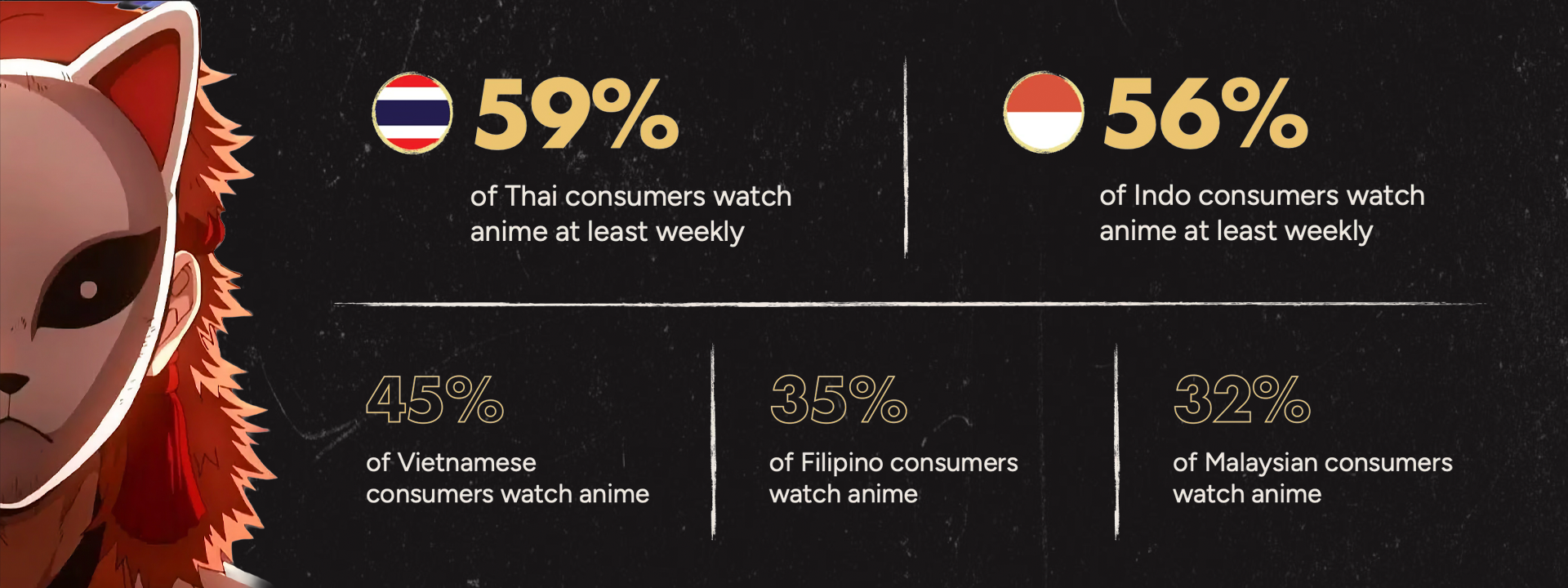
As access expands across streaming, gaming, social platforms, and retail, anime is becoming embedded in everyday life. Weekly viewing is particularly strong in Thailand and Indonesia, while Vietnam, Malaysia, and the Philippines continue to show strong affinity for anime content.
The Evolving Ecosystem: Growing Up With Anime
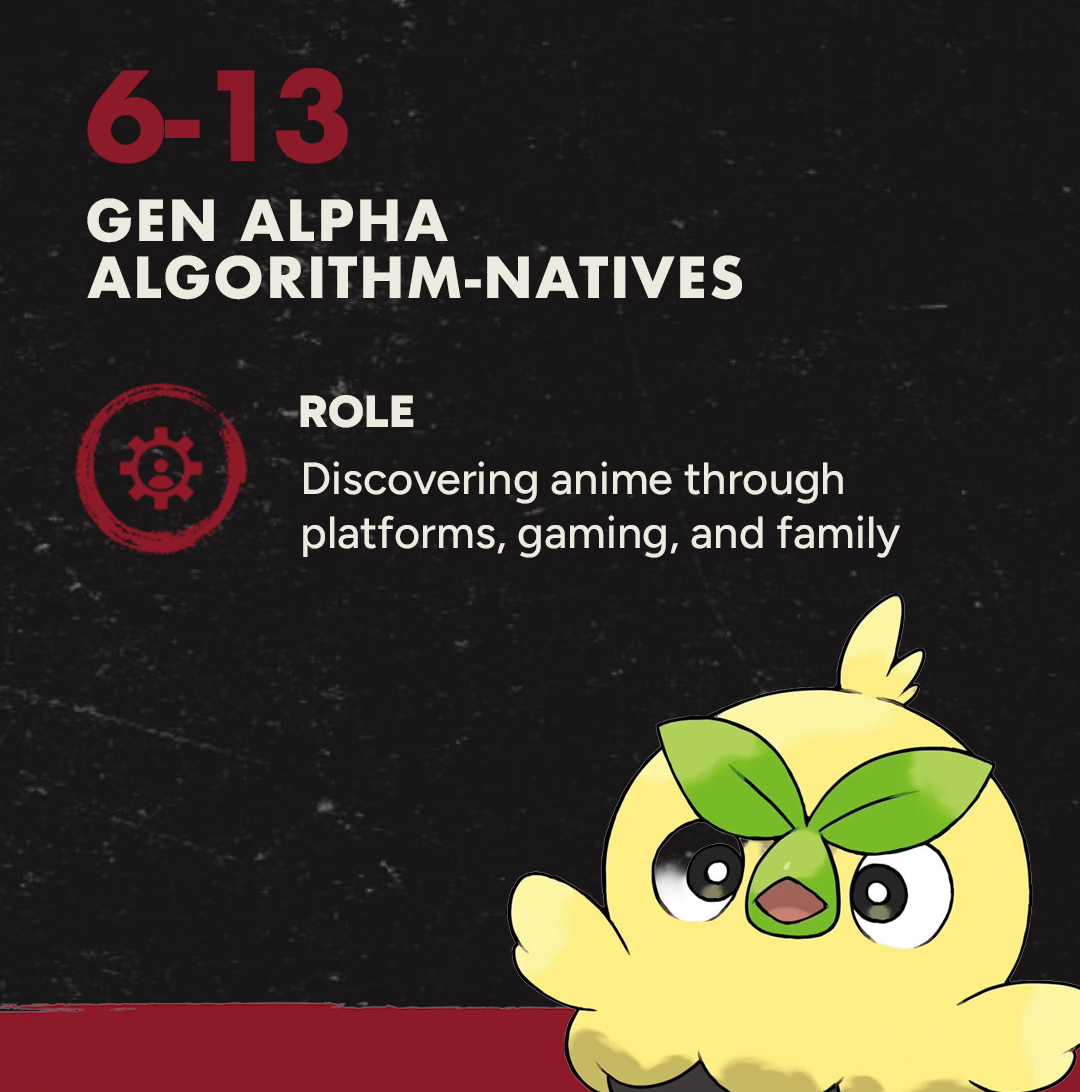
This spending behavior is fueled by an expanding fan economy. Fans don’t age out of anime. Their relationship with it evolves, and often gets passed on. This intergenerational effect is already visible in discovery: 53% of Gen Z viewers say friends introduced them to anime, while 23% cite their siblings.
DISCOVERY
IDENTITY
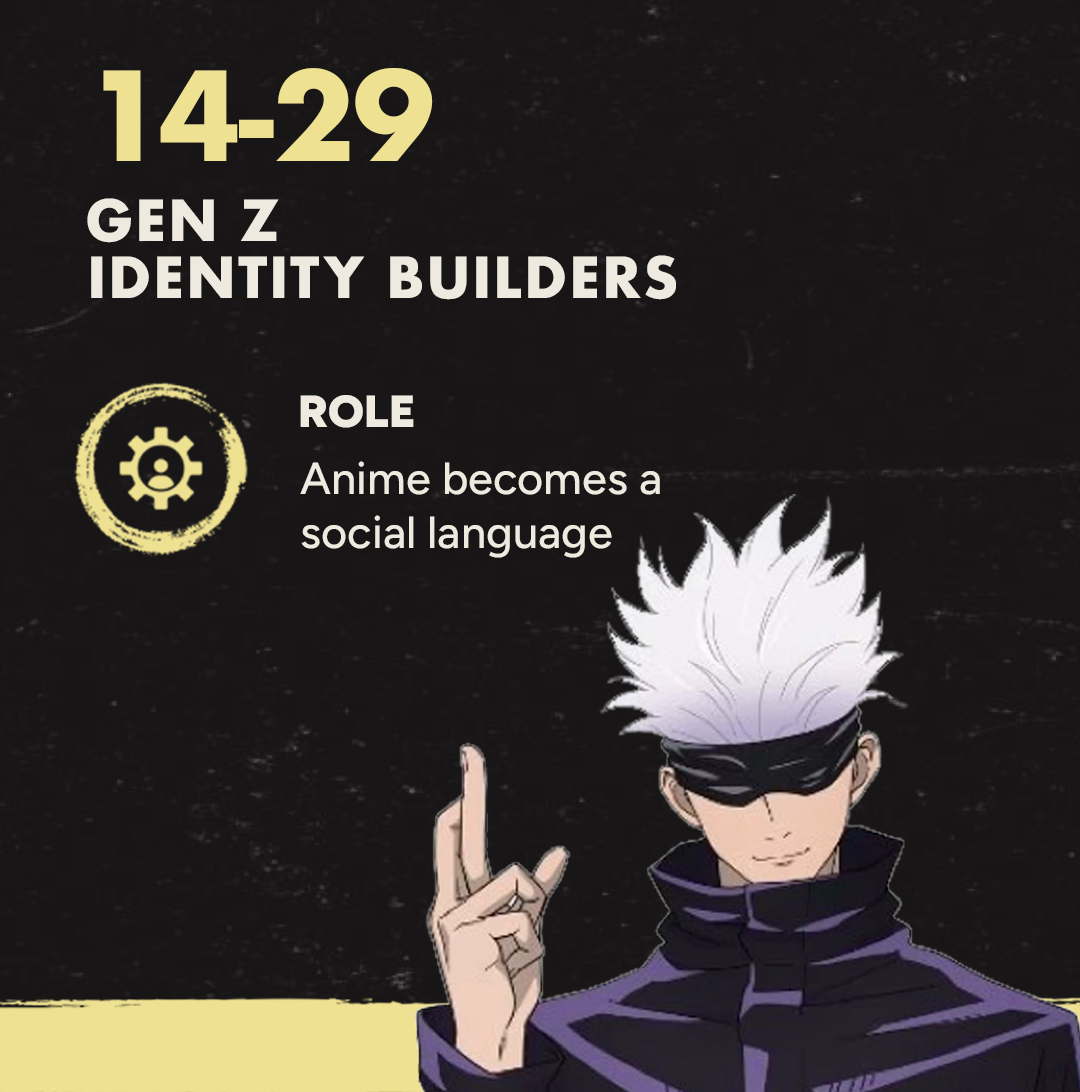
LIFESTYLE
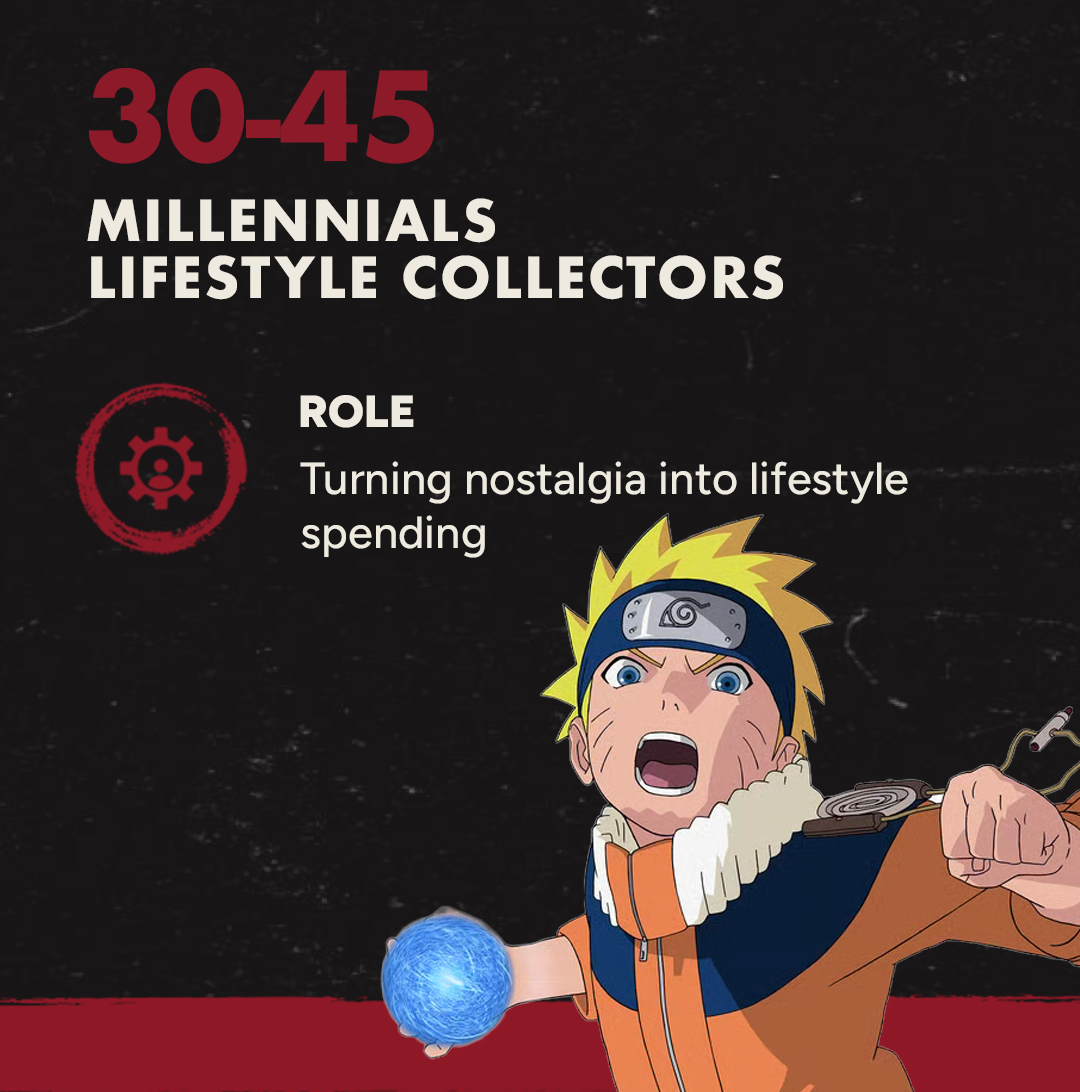
LEGACY
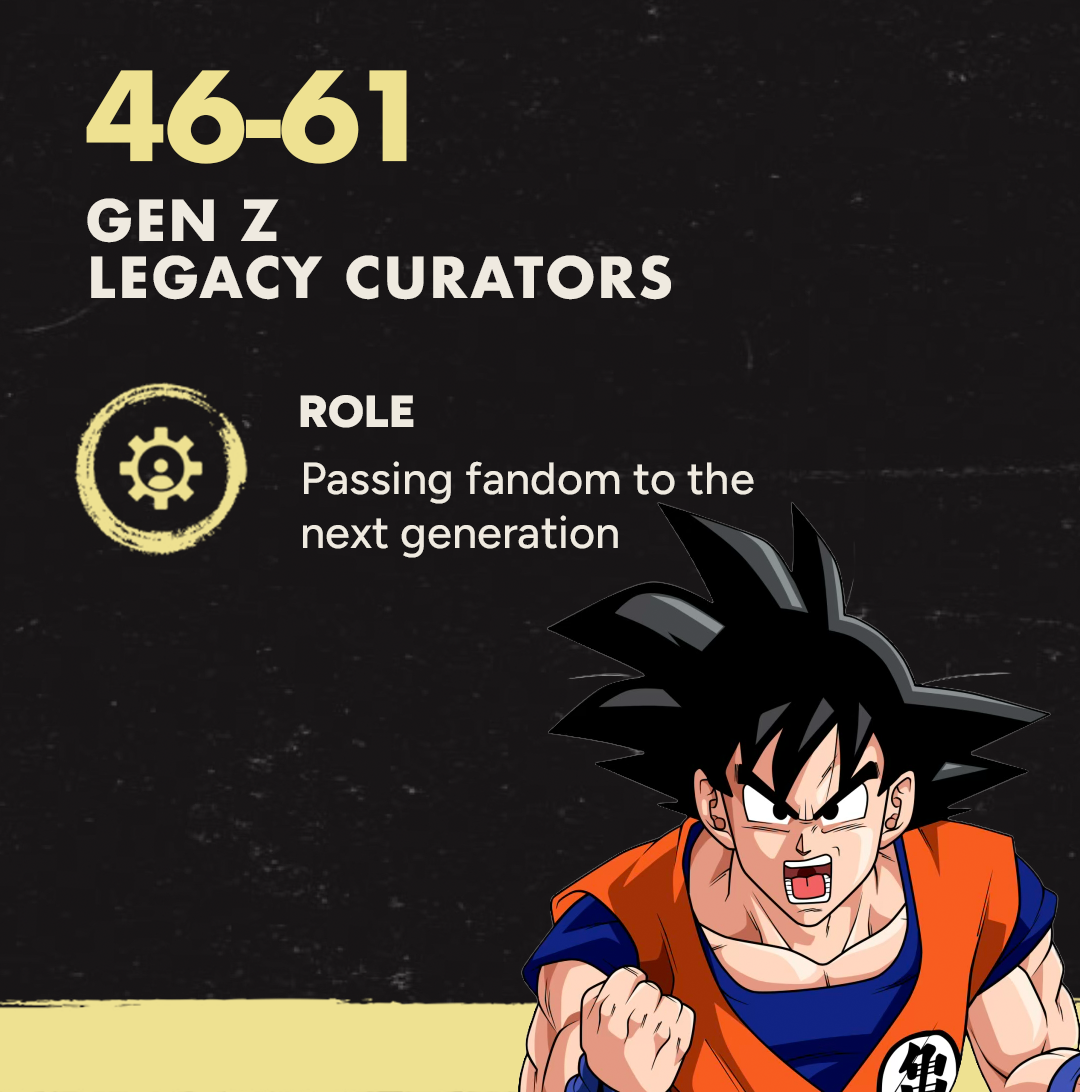
HERITAGE
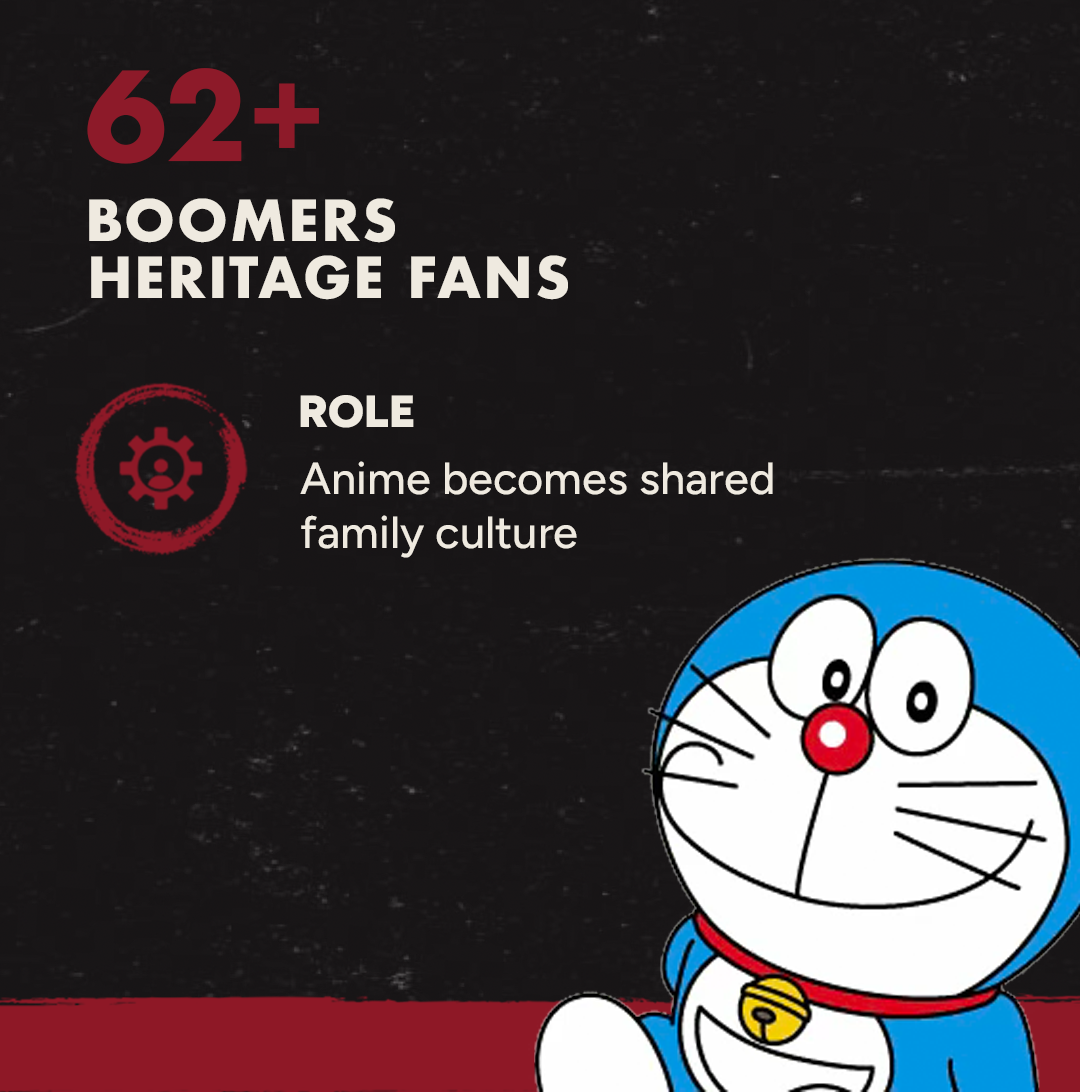
As anime audiences grow and evolve, the industry expands with them. What once followed a linear manga-to-screen path now moves across a far wider ecosystem. Anime IP can begin in publishing, streaming, gaming, or animation, then extend into cinema, live music, merchandise, fashion, retail, travel, and immersive experiences.
For brands, the opportunity is no longer proving anime’s scale. It is understanding how fandom works and where brands can credibly participate.
The next era of anime partnerships belongs to brands that become portals to worlds fans love and live. That requires strategy, fluency, and not just partnership access.
The Anime Growth Engines
Anime’s reach across culture and commerce is being accelerated by five interconnected forces, each creating new ways to discover, participate in, and spend within anime worlds.
STREAMING
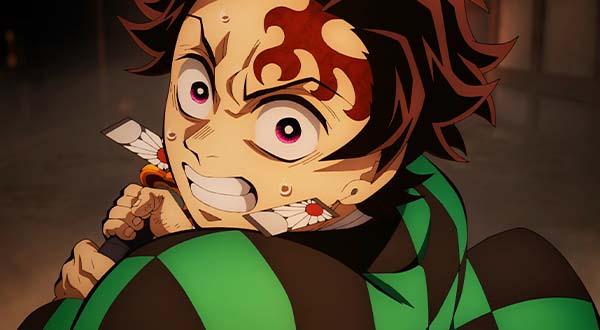
Anime used to require active hunting through P2P, tape trading, and fan communities. Now, global platforms like Netflix and Prime Video, alongside Crunchyroll, stream thousands of titles on demand.

GAMING
Southeast Asia’s anime-game collaborations create repeat behavior. The brands that know how to do this go beyond skins—translating anime worlds into gameplay, from Naruto’s jutsu to Attack on Titan’s movement fantasy and Jujutsu Kaisen’s cursed techniques.
LIFESTYLE AND COMMUNITY EVENTS
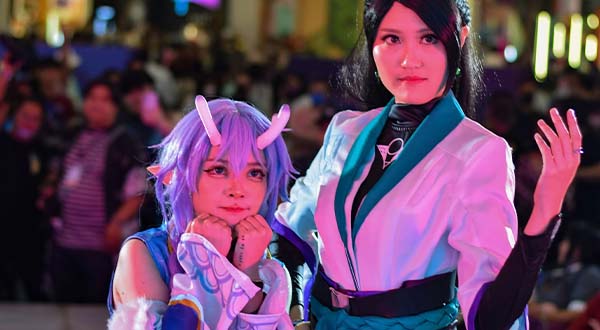
Across Asia, conventions have grown from niche gatherings into major multi-day events. Malls, cafés, cinemas, and concert halls are giving fans more accessible ways to meet, trade, discover, and spend.
MERCH AND COLLABORATIONS
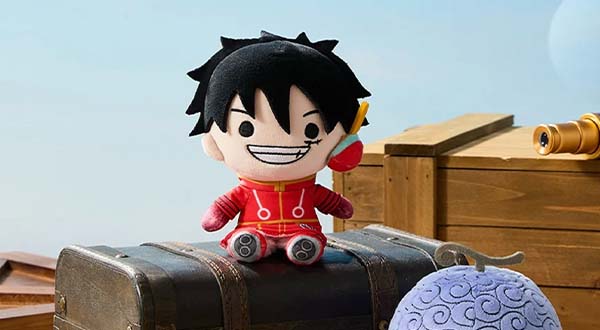
For fans, merchandise is identity made tangible. UNIQLO and MINISO brought anime merch mainstream, while luxury houses translate iconic IP into craft-led fashion. For licensors like Medilaink, that demand is material. IP pushes revenues to new heights as brands clamor for association.

CELEBRITY-LED FANDOMS
Creators across music, sport, fashion, and entertainment are openly channeling anime’s characters, values, and story worlds. Their participation turns otaku identity from a private hobby into a public badge of taste, creativity, and belonging.
In this edition of Culture Drop…
This year, we examined the brands that have successfully leveraged anime’s growing popularity. Drawing on research into market signals and both global and regional fan behaviors, the report analyzes anime’s biggest leaps over the past three years and identifies opportunity gaps brands can fill in the future.
In the full report, you’ll also learn about:
- Psychographics of anime fans across generations, from Boomers to Gen Alpha
- An overview of the new anime ecosystem and recent reported market data
- In‑depth analysis of the five growth engines driving anime’s expansion
- Detailed global case studies of brand‑anime IP collaborations
- Identification of the three gaps brands can bridge in the coming year