

18 SEPTEMBER 2026
Welcome to this week’s edition of Culture Wire, a newsletter brought to you by Singapore-based pop culture and lifestyle marketing agency Culture Group.
In this week’s edition:
- Headline of the Week: Is every brand in its merch era?
- Fax, No Printer: What did fintech company Ramp just announce?
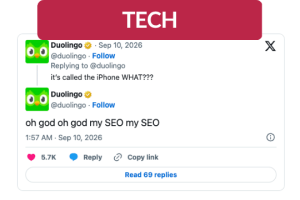
- Before You Leave: Why the new iPhone, theme park NPCs, and explainer TikToks are all the rage these days
Headline of the Week
👕 EXIT THROUGH THE MERCH STAND
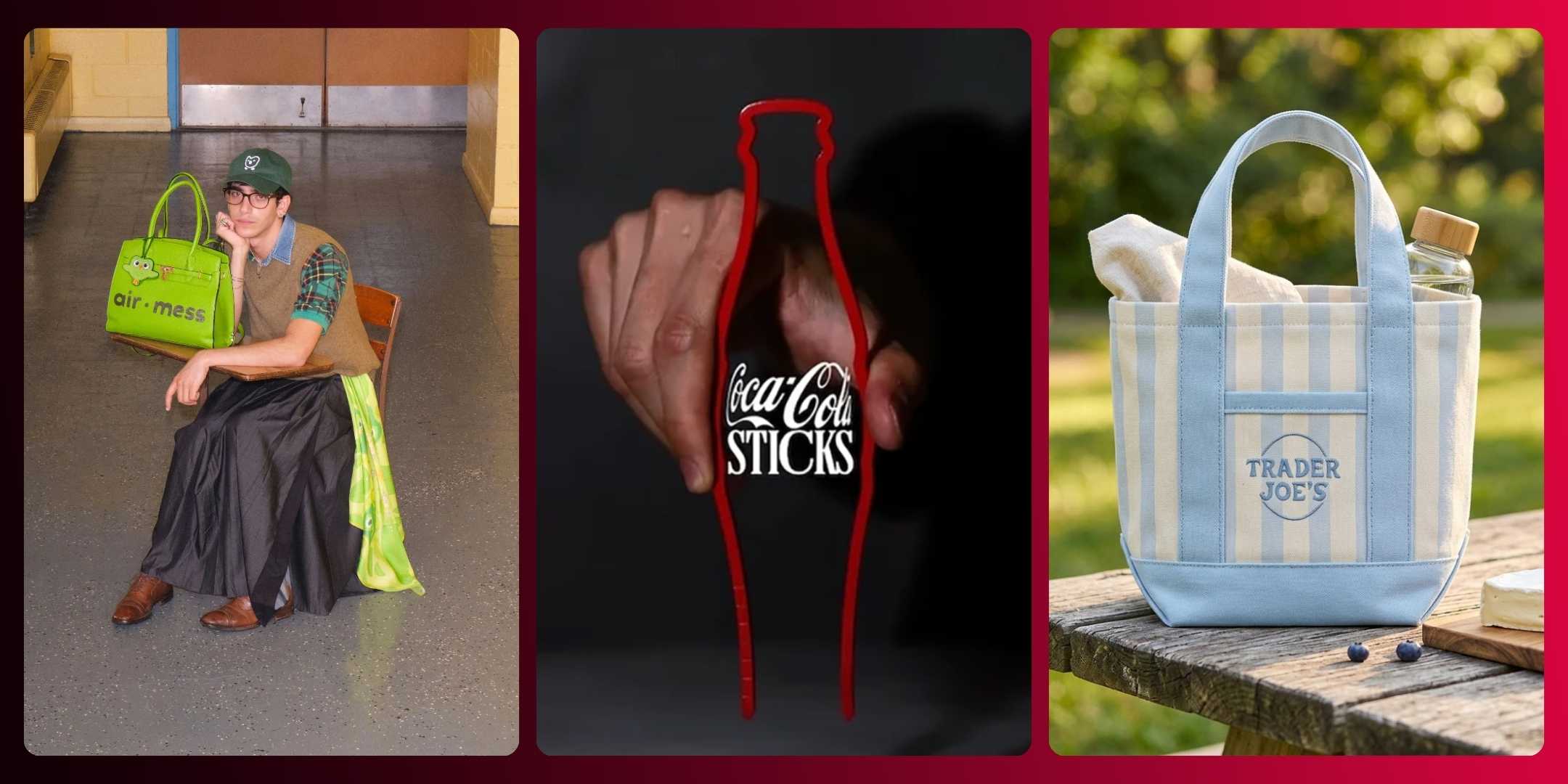
Say Hermès aloud. How’s your pronunciation? If it’s not quite up to par, fear not – it’s common enough that Duolingo built a campaign around it. After its own research revealed that 62% of Americans were confident they could pronounce Hermès but just 15% got it right, the language learning app created The Phonetic Collection. Unveiled at New York Fashion Week, the seven-piece collection spells out tricky designer names phonetically (‘air-mess’ for Hermès, ‘zhee-vahn-shee’ for Givenchy). Existing learners can spend their streak bidding on items at the NYC pop-up, while those new to Duolingo have a reason to download the app and start one.
Merch has come a long way from logoed tees for loyal fans, with some brands using it to pull in new customers. Duolingo does it with an unserious twist. 7-Eleven Japan is at it too, last week announcing an apparel range that will include Hello Kitty hoodies. It’s all part of a push to reach younger female shoppers. So let’s unpack the merch mania.
💡 OUR TAKE
Merch is a way for wearers to signal something about their taste and lifestyle, spending power, how in the know they are, or where they’ve been. Simple tote bags from luxury hotels and resorts have become a status flex because the brand logo is often only recognisable and affordable to a select few. And while the Aman Essentials’ classic monogram tote will set you back $2,700, IYKYK merch doesn’t have to be expensive. Trader Joe’s viral mini tote provides cultural literacy for $2.99 (although some go for much more on the resale market).
What a brand can get away with though, depends on what it already is. Duolingo’s phonetic collection works because turning a language lesson into a fashion joke fits its well-established ‘unserious’ brand identity. In the UK, Greggs can sell steak bake bean bags (yes, really) because it’s a national treasure and being in on the joke is part of the appeal. Coca-Cola can redesign chopsticks in the shape of its contour bottle because the silhouette is a logo.
For brands looking to reach a new audience, borrowing cultural cachet is an option. That’s the route 7-Eleven Japan is pursuing, first by tapping And ST’s brands like Niko and Lowrys Farm and through the Hello Kitty items. An early pilot suggests that this could make the brand more appealing to Gen Z: overall apparel sales more than doubled during a 2025 trial that saw seasonal products and other merchandise introduced, with women making up more than 70% of customers. Younger shoppers were over 1.5 times more represented than usual.
Still, while merch can help brands extend reach, some of the biggest successes are often a reminder of how much fans want in. Some viral hits – Trader Joe’s mini tote, we’re looking at you! – play to existing stans, who spend 2.6 times more than the average shopper and visit stores more. And with 44% buying the totes as gifts, the reach goes further than the buyer. That doesn’t necessarily mean new customers, but it gives existing fans a way to share the love. Here, merch functions less like recruitment and more like an outlet for fandom.
In 2026, merch is big business, with larger brands looking to replicate the success of indie pioneers, who showed that people will buy things that make them feel part of something. But as the merch field gets more crowded, it’s harder to stand out. The brands that continue to see success will be those whose merch has a reason to exist: it fits who they are and gives people a way to express something about themselves. After all, being a walking logo only appeals when it says the right thing about you.
Fax, No Printer*
For those of you born before 1997, ‘fax, no printer‘ is Gen Z speak for ‘undeniable facts I agree with’
US AI fintech company Ramp just announced an unconventional creative endeavor. What have they done?
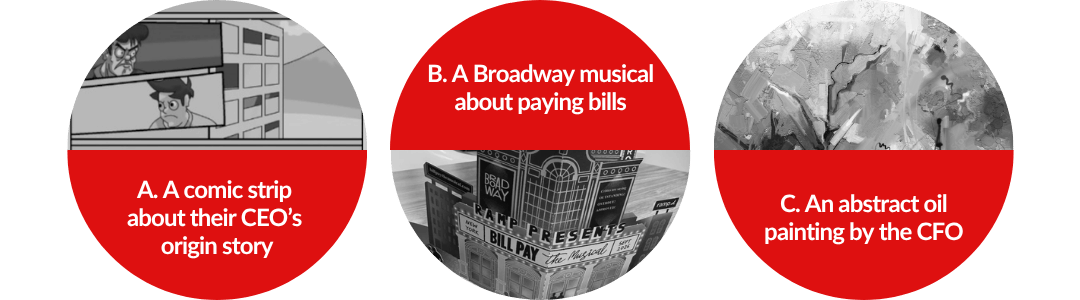
Scroll to the end of the newsletter for the correct answer!
Before You Leave

This Week's Trivia Answer
B. A Broadway musical about paying bills
This isn’t Rent: The Sequel. Ramp is putting on Bill Pay: The Musical, a free one-night only Broadway musical comedy featuring actual industry ‘Bills’ Billy Porter and Billy Zane. The theme is ostensibly about the ups and downs of paying bills, with a title that even riffs that of storied theater magazine Playbill’s.
You may think this is just a 2.5 hour long commercial with intermissions, but storytelling in the service of sales has a long history. The ‘industrial musical’ stems from the mid-twentieth century where American companies staged productions centering their products and services to edify and entertain employees and the public. An even earlier form of this was radio dramas, which led to the creation of the term soap operas – companies like Proctor & Gamble created serial radio dramas to shift product.
Bill Pay also isn’t the first of its kind in recent memory – household names such as Olay (catchy YouTube songs turned musical number) and Skittles (done during the Super Bowl period and featuring lead Dexter actor Michael C. Hall) have also created for this space.
The revival of this form factor showcases how brands continue to try to create culture, alongside sponsoring it (and Broadway could do with much more sponsorship). It’s unclear how many customers Ramp might gain from the show itself, but they’ve ensured publicity numbers and are clearly building a brand reputation for the out-of-the-ordinary. Engaging with theater go-ers might also gain the brand some goodwill.
On the Southeast Asia front, Grab and Singtel co-owned GXS Bank also said they had community building in mind, by engaging local Singapore run clubs and F&B businesses in the launch of its new credit card. The message was to meet people where they are, and to fit into their daily lives and routines. Grab also tried to channel this with the launch of I Fell in Love with My Grab Driver, a microdrama that generated some controversy over the romance plotline of Grab customer and Grab driver-for-hire.
All these scripted shows are definitely commercials, but that doesn’t mean that they have no part to play in the culture, nor that they automatically will endear the brand to people. Storytelling for a brand means playing the long game, experimenting with mediums to determine what resonates with consumers and to build a clear point of view. From microdramas to games, how are you thinking of branded content?
🚀 Over and Out!
Pop culture insights are better when shared. Subscribe, forward this on, or share the love on social media. Thanks for reading!
Your Culture Mavens,
Angela, Twila, Crystal, Helena, Teri, & Vicki