

21 AUGUST 2026
Welcome to this week’s edition of Culture Wire, a newsletter brought to you by Singapore-based pop culture and lifestyle marketing agency Culture Group.
In this week’s edition:
- Headline of the Week: Artists are taking community building to the next level
- Fax, No Printer: What are Starbucks China and Rednote doing together?
- Before You Leave: How are luxury brands making a normie play?
Headline of the Week
🪩 OFF THE RECORD
The fourth iteration of A Very Laufey Day – which takes place this weekend – is a very global affair, spanning 25 countries, including Bangkok, Singapore, Jakarta, and Manila. Curated by Laufey, Gen Z’s favorite singer-songwriter, it’s a celebration of the arts that encompasses symphony orchestras, ballet, jazz, opera and museums. According to Laufey, the goal is to help younger listeners connect with ‘high culture’, although there are less intimidating entry points like bookstores and coffee shops. She started the fan event in 2023 as a way to inspire Lauvers to get outside by sharing her ideal one-day itinerary, soundtracked by her upcoming second album. It’s expanded every year since.
Laufey isn’t the only artist meeting fans somewhere other than the music. Dua Lipa has a book club. The Weeknd streams video games and champions indie studios. Later this year, Korea’s SM Entertainment will stage a 10k race followed by live performances from idols. Taken together, they reveal new points of connection between artists and fans. For brands trying to reach the same fans, that’s important.

💡 OUR TAKE
A side hustle used to mean a fragrance deal or a co-designed fashion label. Now, what artists do when they’re not making music is becoming more than a support act – it’s a way to build community with fans around interests that extend beyond the music. There’s interest in this type of crossover: a 2026 Eventbrite study found that 69% of 18-to-35s in the US and UK want more events that combine different interests, like crafting and cocktails or culture and movement.
The Weeknd sought out the makers of indie games he loved, spent hours with them talking about design and posted about it. Vietnamese rapper Binz eschewed a traditional listening party and instead celebrated the launch of his debut album with a painting workshop for fans and collaborators. Or consider secondhand fashion marketplace Depop, who partnered with Spotify to give music lovers access to the wardrobes of six up-and-coming artists. That gave fans a way to buy into the taste or style of an artist, important in an age when subcultures provide fewer ready-made identity codes.
Artists’ community building efforts might not be lucrative, but crossover fandoms can result in surprising benefits. Diplo’s run clubs, which first launched in 2024 (5k, followed by a 90-minute live DJ set), expanded to 10 US locations this year. Despite attracting 10,000 to 15,000 people to each event, profitability isn’t guaranteed – the logistics are expensive. But the run clubs did help the DJ/producer become a global ambassador for Whoop and appear in an ad campaign with Cristiano Ronaldo.
Plenty of brands are chasing the same thing: a loyal community that gathers and stays. It comes more easily to Laufey and co., because the interest is real and not reverse-engineered from a growth target. When BINI’s Aiah hosted the group’s second BINI Run in 2025, she called running her ‘safe space’ and hoped Blooms would feel the same benefits from exercise. That kind of genuine interest is hard for a brand to manufacture, making artists both a useful partner and a potential competitor. So where does that leave a brand that wants in?
Brands can fund artist-led run clubs and book clubs and there is genuine demand here, with young people seeking in-person events. Thoughtful and relevant sponsorship has a place, and the wellness brands that handed out products at some of Diplo’s events are one example of that. But the community belongs to the artist, so it’s the artist’s crowd that decides if a brand is ‘worth’ letting in. The brands that earn entry will offer something the fandom couldn’t easily access (Laufey gave fans a route into art galleries and symphony halls, for example). Access, a venue, an experience, or a tool: the question isn’t which artist to book, it’s what your brand contributes to the community.
Fax, No Printer*
For those of you born before 1997, ‘fax, no printer‘ is Gen Z speak for ‘undeniable facts I agree with’
Starbucks China and Rednote have partnered on a community program anchored on special interests. What are the categories?
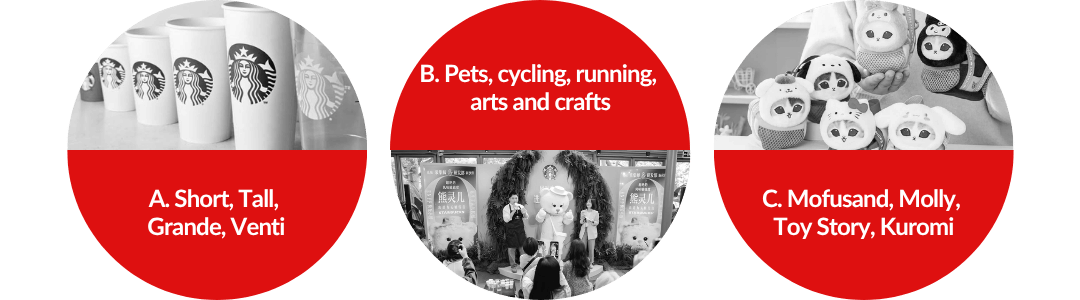
Scroll to the end of the newsletter for the correct answer!
Before You Leave


This Week's Trivia Answer
B. Pets, cycling, running, arts and crafts
The coffee wars are brutal in China. Starbucks faces cut-throat pricing (Cotti Coffee’s sub-dollar promotional pricing), aggressive brick-and-mortar expansion (Luckin Coffee’s 30,000 store count in China versus Starbucks’ 8,000), and whatever the world’s largest fast food chain is doing at the moment.
More than ever, Chinese consumers are looking for brands that reflect and are additive to their identities and interests, and this extends to choice of beverage. By partnering with social platform Rednote, Starbucks created an online-to-offline program that drives consumers to select stores-turned-community-spaces that revolved around those four original interest groups. The program has now run for one year, and was recently expanded to include books and music, where stores hosted writer meet-and-greets and served as gathering spots before and after concerts.
Last year, Rednote formally revised its slogan from, loosely translated, ‘your life guide’ to ‘your life interest community’. No longer standing for just a space where users dump recommendations, the platform actively promotes itself as an ecosystem to foster and cultivate interests and hobbies. Partnerships with brands like Starbucks make sense, giving consumers a reason to frequent actual stores and also engage with the app. Rednote’s knitting-centric activation brought together creator-sellers, knitting fans, and eventually even Starbucks, with stores hosting cozy afternoon sessions.
Will Starbucks continue these activities for the long term? It is just a matter of time before a coffee competitor does something similar. Rednote’s success with these partnerships and programs is also linked to how well it maintains a healthy medium for authentic and grassroots user generated content, something which another platform currently struggles with (see our Before You Leave section).
As we’ve covered before, the online-to-offline journey can seem like a hamster wheel, but should be viewed as a marathon in service of brand growth and consumer loyalty. Don’t see ‘third space’ as just a buzzword, but engage with it to demonstrate how well you understand your multi-hyphenate community.
🚀 Over and Out!
Pop culture insights are better when shared. Subscribe, forward this on, or share the love on social media. Thanks for reading!
Your Culture Mavens,
Angela, Twila, Crystal, Helena, Teri, & Vicki