

7 AUGUST 2026
Welcome to this week’s edition of Culture Wire, a newsletter brought to you by Singapore-based pop culture and lifestyle marketing agency Culture Group.
In this week’s edition:
- Headline of the Week: The Pop Mart Expansion Pack
- Fax, No Printer: Cinema’s New Collectible Economy
- Before You Leave: From Heartthrobs to Superheroes
Headline of the Week
🌟 A STAR IS BORN
Pop Mart’s latest empire-building chess move is a double-punch opening of a two-story retail store and baked goods space in Singapore’s Resorts World Sentosa. Pop Bakery is a casual, more grab-and-go experience, not to be confused with Pop Mart Cafe in Bangkok, and is the first of the sub-line to open outside of China. The character Twinkle Twinkle is the literal star of the show, though other Pop Mart IPs will also feature in the form of food, collectibles, and character meet-and-greets.
Pop Bakery is the latest in a long, ever-morphing line of branded experiences that focus on physical spaces as a channel for brand expansion and consumer loyalty cultivation. The ROI and long-term impact of these activations on brand health and longevity are still under scrutiny. When everyone and anyone is doing it, what makes a branded experience truly additive to the brand and community?
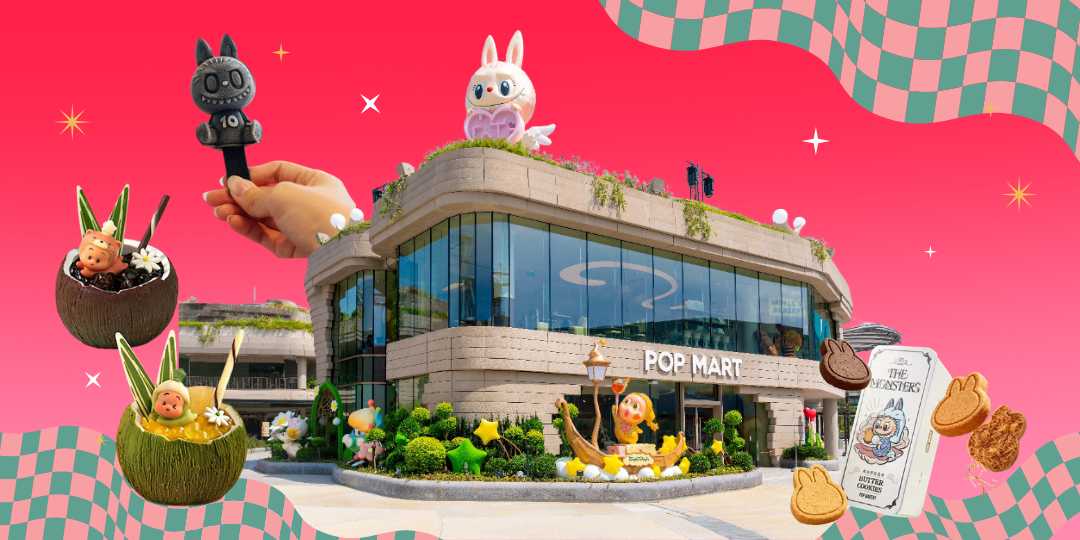
Pop Mart Co-COO and Executive Director Si De has namechecked the Disney playbook for how the company aims to maintain the longevity and value of its IPs via multiple form factors and business lines. Starting with collectible blind box toys, the ‘Disney of China’ has expanded into animation, film, as well as the ultimate Disney stamp of approval – theme parks.
In Southeast Asia, Pop Mart’s largest region of business after China, the company already launches collaborations at breakneck speed. The region is ground zero for Pop Mart’s retail++ themed experiences after they’ve gone through the testing grounds of China, starting with F&B.
The accessibility and communal aspect of F&B is the perfect channel for brand extension, also lending well to content creation and shareability. Pop Mart even experimented with dessert trucks in China before deciding on brick-and-mortar. Luxury retail especially is no stranger to F&B, using cafes and restaurants as lifestyle gateways into the brands. Tiffany & Co’s Blue Box Cafe launched this summer in Singapore, and Cafe Carrera serves as Porsche’s watering hole for the community (it’s important to note that this is a stand-alone cafe, and not just a coffee bar in a car showroom).
Branded experiences are tools in the ongoing attention economy where consumers increasingly demand touchpoints that go beyond digital and into spaces where community and identity are formed. We touch upon this in previous reporting on luxury brands organizing literary salons. All brands want to become a ‘way of life’ for consumers, with experiences as a way to speak to and bolster communities anchored around the brand. Make-up brand Glossier was adept at this, creating a world around its direct-to-consumer community-driven launches, making the ‘Glossier Girl’ into a covetable everyday identity for friend groups. Malaysian coffee brand ZUS Coffee created Drip & Drop block parties as a way to cement association with these daily rituals and community activities.
We’re not advising that every brand immediately go set up a food truck, and certainly not everyone has deep enough pockets for theme parks. With branded experiences, consistency and thought are especially important – whether a brand is seen as spraying and praying, or is truly invested in building a story and community. Activities should not be done in a vacuum or seen as long-term guaranteed engagement in isolation.
Disney celebrated its Disney100 corporate centennial in 2023, and Mickey Mouse has his 100th birthday in 2028. Pop Mart definitely has its eyes on the prize.
Fax, No Printer*
For those of you born before 1997, ‘fax, no printer‘ is Gen Z speak for ‘undeniable facts I agree with’
For The Odyssey, Regal cinemas imposed a strict one-per-customer limit, the first in the US chain’s history. But what was it rationing?
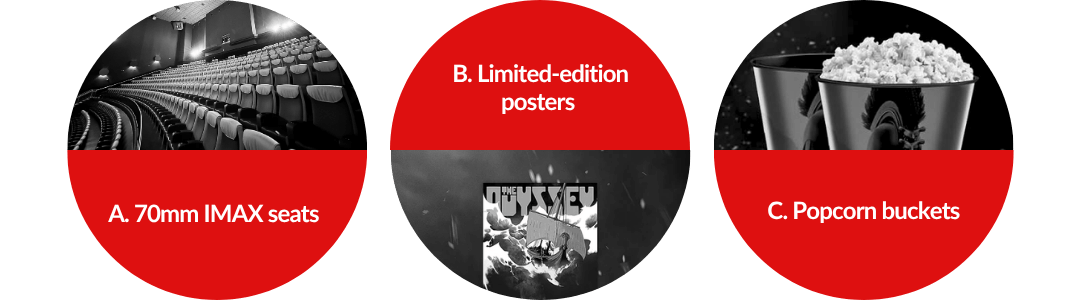
Scroll to the end of the newsletter for the correct answer!
Before You Leave



This Week's Trivia Answer
C. Popcorn buckets
For The Odyssey moviegoers in the US, IMAX tickets were hard to find. But the collectible popcorn bucket? That was even scarcer. Quick primer on those: novelty popcorn buckets have become a merch add-on for cinema chains. Tied to the release of high-profile films, these plastic containers can cost anything from US$50–70, with AMC expecting them to bring in around US$100 million in 2026, almost double the 2023 take.
Last month, IMAX entered the movie merchandise business for the first time with a US$50 replica of the 15/65mm camera The Odyssey was shot on. Unconvinced it would land, CEO Rich Gelfond approved an initial run of 2,500 popcorn buckets which sold out almost immediately. More were shipped in from China, where the film hadn’t yet opened (a 22-inch Trojan Horse version was also available; this time the horse lost).
Limited-edition popcorn buckets are the film industry’s equivalent of a concert t-shirt, a keepsake that proves attendance and doubles as #content. Sometimes the popcorn is incidental – the fans that order the buckets online and display them on shelves dedicated to movie memorabilia probably aren’t using them for movie snacks – and, given the capped runs and one-per-customer limits, the US$70 Trojan Horse bucket ended up on resale sites for close to US$165.
None of this is happening in isolation. Collectible toy sales grew 32% globally last year, to almost a fifth of the toy market. And, as this week’s main story shows, Southeast Asia is one of Pop Mart’s biggest markets. The appetite for collectibles is there, but the popcorn bucket is a cinema object and the US boom rides on Gen Z turning up for the big-screen experience (and that enthusiasm is more contested than the headlines suggest). Whether younger SEA audiences share that motivation just isn’t documented. So even if the buckets don’t take off locally, the underlying shift is worth watching: when anything can be merch-ified (technical term), the real question is what isn’t merch yet. And what could be?
🚀 Over and Out!
Pop culture insights are better when shared. Subscribe, forward this on, or share the love on social media. Thanks for reading!
Your Culture Mavens,
Angela, Twila, Crystal, Helena, Teri, & Vicki