

26 JUNE 2026
Welcome to this week’s edition of Culture Wire, a newsletter brought to you by Singapore-based pop culture and lifestyle marketing agency Culture Group.
In this week’s edition:
- Headline of the Week: Coach is rewriting the luxury playbook
- Fax, No Printer: What’s the deal with this South Korean app?
- Before You Leave: From Playing Cards to Pop Stars
Headline of the Week
✍️THE CO-AUTHORED BRAND
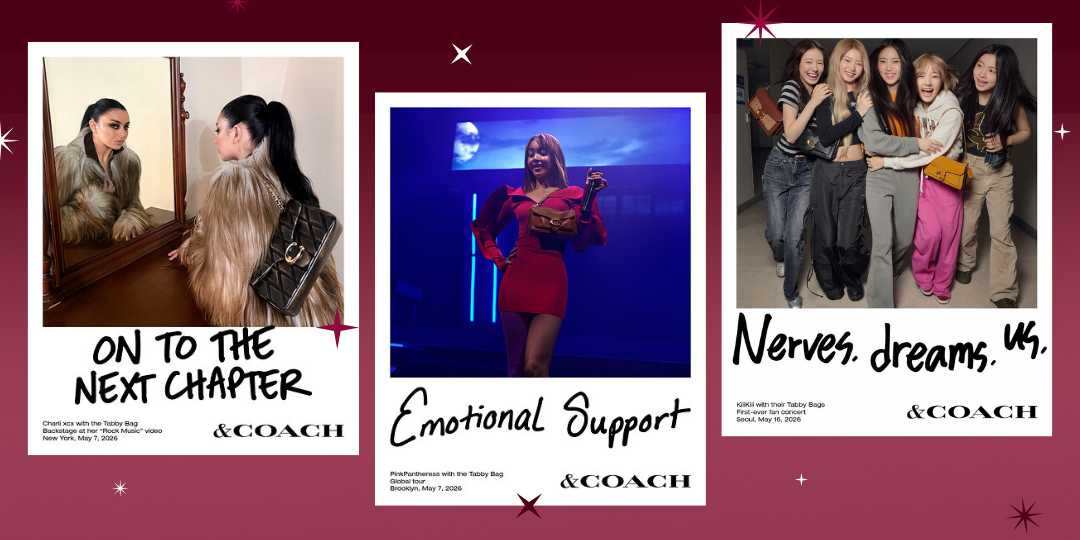
Coach continues to appeal to Gen Z with two new initiatives. First up is &Coach, a new content series created with Gen Z communities, creators and cultural figures including Charli xcx, activist Malala Yousafzai, WNBA star Paige Bueckers, NASCAR driver Toni Breidinger, singer PinkPantheress, actor Avantika and South Korean girl group KiiiKiii. The content will be delivered on dedicated TikTok and Instagram accounts, with new ambassadors and community participation options to be added. It expands on themes like self-expression and identity that were part of Coach’s Spring 2026 book-focused Explore Your Story campaign, extending them into new cultural spaces.
Last – and by no means least – this week saw Coach announce a global cultural partnership with Spotify that will focus on experiential marketing activations for Gen Z, both on-platform and IRL. When viewed together, these activations show that Coach is taking a more holistic approach to connecting with Gen Z across culture, music, sport and activism.
💡 OUR TAKE
The luxury industry spent the last decade chasing Gen Z with passion-point strategies. While the logic was sound — Gen Z are passionate, community-oriented and typically spend where their interests live — it assumed those interests stay separate. And they don’t! According to Mastercard’s 2026 Next Growth Generation report, 65% of global Gen Z think of themselves as creators building their own personal brand, assembling an identity from music, sport, activism, fashion and more at once. Showing up in one place and hoping for a halo effect is no longer enough.
The brands that have worked this out are building around the spaces where identity actually forms. Luxury’s move into literary culture is one example: Miu Miu’s literary club and Jil Sander’s Reference Library at Milan Design Week show that, for many luxury brands, cultural credibility is the new currency. But most of these initiatives tap experts and institutions for authority, and the consumer mostly remains passive, attending and absorbing but not always contributing or building. Coach is trying something more participatory and, given that the brand spent much of the 2010s in the bargain bin, it had good reason to try something different.
Coach CMO Joon Silverstein is a former cultural anthropologist who still visits the homes of women aged 18-30 with the goal of understanding who they’re trying to become. “A lot of brands mistake data for real insight,” she told the Wall Street Journal earlier this year. “You don’t learn about people or culture by reading research reports or by studying them afar.”
That thinking helped to shape Explore Your Story which included book bag charms developed by Penguin Random House and featured titles chosen by Gen Z customers. &Coach applies the same logic more broadly: Charli and co. aren’t there to lend cultural credibility. They represent the non-categorical way younger consumers build identity. The Spotify partnership builds on the same idea: music isn’t the passion point, connection is.
Coach sales hit US$2.14 billion in Q2 2026 (up 25% YoY) and the brand continues to gain traction with younger consumers (Gen Z represented roughly one-third of new consumers globally during the quarter). By 2030, Gen Z is projected to represent 25% of global luxury spending, up from 4% before the pandemic. As Silverstein explained at the Spotify launch, the brands that win won’t just be the ones that reach people; they’re the ones that bring people together.
Other brands are testing the same shift. In China, Salomon invited emerging designers to reinterpret its archive, then put the results to a public vote at its Shanghai concept store, with the winner getting a long-term collaboration. The archive remains Salomon’s, but consumers get a say in what gets made from it. See also the Vaseline Originals line that turned viral beauty hacks — many developed by early content creators who never got credit — into commercially available products.
What Coach, Salomon and Vaseline have in common is a willingness to make the brand less of a finished story and more of a world consumers can build inside. For Coach, that means moving across multiple passion points and betting that Gen Z consumers want brands to make room for every part of their identity. For a brand without much signature aesthetic to protect, that may be an advantage. What does that mean for brands still betting on a single story?
Fax, No Printer*
For those of you born before 1997, ‘fax, no printer‘ is Gen Z speak for ‘undeniable facts I agree with’
The new app that’s taking South Korea by storm has a twist. It looks like a regular ___ but it’s not.
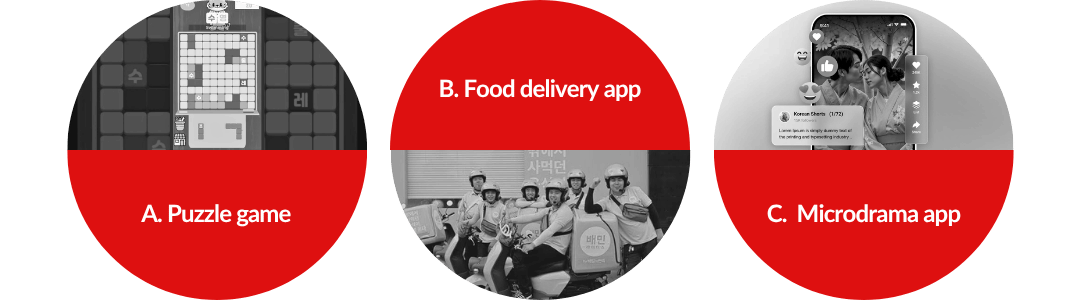
Scroll to the end of the newsletter for the correct answer!
Before You Leave



This Week's Trivia Answer
B. Food delivery app
FoodNeverComes is an example of a dopamine site. These are digital interfaces that simulate an action, which leads to anticipation of a reward (this causes the dopamine release in the mind) but without the actual payoff.
The app, created by a sole developer who goes by ‘Malhee’, mimics all the inputs and outputs of the common food delivery app. You input personal details, scroll and select from a list of restaurants and menu items, and even track the delivery person. The twist is already revealed in the name of the app.
South Korean social media is currently debating the point of dopamine sites, of which a few others are reportedly popular amongst Gen Zs. One site is a simulation of a smoke break room, where you can click a ‘start’ button and digitally hang out and commiserate with whoever else happens to be online at the same time – an online third space that spoofs a physical back-alley.
Naysayers say these sites are just another example of digital culture gone wrong, but supporters cite the importance of low-pressure connections (as in the online smoke break room) and even as a step towards breaking bad habits (like compulsive online spending).
No user numbers have been disclosed, but with all the awareness and engagement, brands as well as game developers should have their eyes on FoodNeverComes. In an alternate timeline, this would have been the perfect gamified brand activation or the launch of the latest mobile hit. Life simulation is an evergreen game genre, be it power-washing (PowerWash Simulator 1 & 2) or living in the Japanese countryside (Japanese Rural Life Adventure). Brands actively experiment with games as a medium for marketing and story-telling, like with Japanese FMCG company Kao Corporation’s ghost-busting-via-cleaning game Silent Cleaning or Gentle Monster’s horror game (as reported in Culture Wire).
We want to know—what will FoodNeverComes Version 2.0 look like?
🚀 Over and Out!
Pop culture insights are better when shared. Subscribe, forward this on, or share the love on social media. Thanks for reading!
Your Culture Mavens,
Angela, Twila, Crystal, Helena, Teri, & Vicki