

15 MAY 2026
Welcome to this week’s edition of Culture Wire, a newsletter brought to you by Singapore-based pop culture and lifestyle marketing agency Culture Group.
In this week’s edition:
- Headline of the Week: The Rise of SEA Pop
- Fax, No Printer: A South Korean Buddhist temple makes bold moves
- Before You Leave: From Mahjong to Miu Miu, our latest culture scan tracks what’s next for brands
Headline of the Week
🇵🇭 HEADLINE ACT
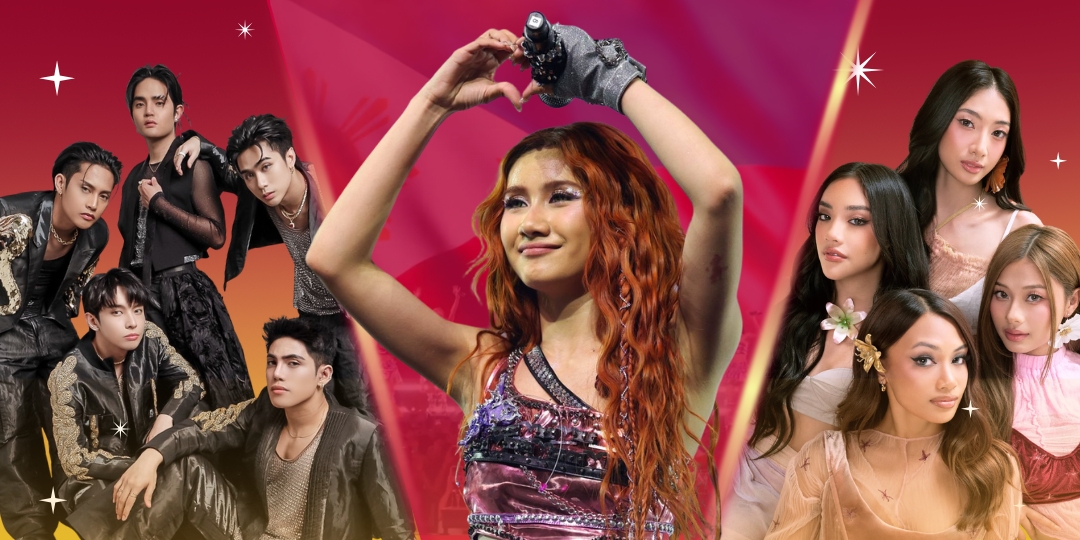
Filipino pop is having a festival moment. Weeks after BINI made history as the first Filipino act to perform at Coachella—and drew the kind of online attention that’s usually reserved for much higher-billed acts—SB19 are gearing up to perform at Lollapalooza. Novelty bookings these are not: BINI’s 2026 world tour includes stops in the US, Europe, and Asia, while SB19 reached 1B Spotify streams at the start of the year.
BINI and SB19 are perhaps the highest-profile examples of a broader shift: across Southeast Asia, local-language artists, homegrown formats, and culturally specific stories are rapidly gaining ground. This isn’t one ‘wave’ replacing another, rather the emergence of multiple local scenes with increasingly engaged audiences.
While previous SEA exports like NIKI and Rich Brian saw international success singing and rapping in English, these newer acts are finding global audiences while performing in their own languages. There’s still a place for global culture, but SEA consumers are becoming more confident that what’s made close to home belongs on the biggest stages.
OUR TAKE
Interest in local acts is intertwined with the evolution of K-pop. As the genre’s focus has shifted towards global audiences—think English-language releases, multinational line-ups and international training systems—it’s become both a global template and less of a geographically fixed category. But this has also allowed for the idol infrastructure to be adopted and remixed across SEA, as the all-Indonesian girl group NO:NA reveals. Although trained in an idol pipeline, they’re distinctly ‘local’, with gamelan, Balinese cymbals, and music videos set in rice terraces.
Meanwhile, the systems around these emerging local acts are also being built locally, through a mix of government funding, major-label investment, industry bodies, and international competition formats. Thailand’s Creative Economy Agency is in year three of Music Exchange, a program that’s seen 95 artists participate in 64 international festivals. In Vietnam, Sony Music took a 49% stake in YeaH1 Group’s music production unit to build a ‘direct pipeline’ for V-pop to reach international charts. And this November, Bangkok will host the inaugural Eurovision Song Contest Asia 🏆.
Of course, consumer interest in local acts predates export programs or investment, but now the scale is almost impossible to ignore. OPM’s share of Spotify’s Philippine daily Top 50 rose from 44% in 2023 to 63% in 2026 (note that we’ve been tracking this since budots crashed brat summer in 2024). Meanwhile in Thailand, daily music charts are a mix of K-pop and T-pop and Thai hip-hop, with Jeff Satur (the second most-streamed Thai act on Spotify globally) touring arenas across Asia and Latin America. Homegrown Malaysian acts like K-Clique are building a dedicated regional fanbase. And while Singapore remains an outlier, with K-pop, Western pop, and Mandopop still dominant, interest in local stories is surfacing in other formats.
Single x 35, a manga set in Singapore, recently went viral with fans praising the depiction of MRT commutes, bidding wars for in-demand apartments (brutal), and career stagnation. It sits alongside other webcomics like Woke Salaryman and Indonesia’s Tahilalats as an example of homegrown IP built on everyday anxieties and humor that—crucially—don’t need to be explained to the audience. Brands are starting to get it, too. Airbnb’s partnership with MILLI turned the Thai rapper into a cultural translator who guides travelers through Bangkok’s creative neighborhoods. Using an artist as an access point into a place and a culture works because MILLI’s credibility with that audience is earned.
For years, the safe bet for brands in SEA was to borrow cultural credibility from global acts. More recently, attention has shifted closer to home, but a partnership with BTS, BLACKPINK, or similar was still a bet on the biggest name in the room. Now, with local talent seeing chart success (at home and abroad), those ‘safe’ choices are starting to look less like the smart ones.
Fax, No Printer*
For those of you born before 1997, ‘fax, no printer‘ is Gen Z speak for ‘undeniable facts I agree with’
A Buddhist temple in Seoul, South Korea, has just welcomed a new member, who happens to be a?

Scroll to the end of the newsletter for the correct answer!
Before You Leave



This Week's Trivia Answer
B. Humanoid Robot
Gabi the robot was formally initiated into the Jogye Buddhist order at a time when organized religion and traditions are in flux. Only 8% of South Koreans in their twenties identify as Buddhist, and the percentage of South Koreans in total has dropped from 23% in 2005 to 16% currently. It’s no surprise that Buddhist groups in South Korea are investing in efforts to improve top-of-funnel, from ‘hip Buddhism’ merchandise to meditation apps.
It may be tempting to write off Gabi as the latest robot spectacle, but the road to initiation began with thinking about how to better embed Buddhism in the everyday lives of young people. The temple’s cultural affairs director, Venerable Sungwon, says that robots already feel familiar to people and are already part of the community (perhaps starting out in hotel housekeeping). With Gabi, it’s not about how the robot was turned Buddhist, but how it could lead by example by being a regular fixture of festivals and important occasions in the community. Gabi is meant to be relatable, an ordinary Buddhist—technically not a monk!
Traditions now grapple with how to remain relevant to people in a shrinking attention economy. There’s a renewed interest in Chinese astrology amongst Gen Z in Southeast Asia, who use it as a forecasting tool for business and career. Plain-speaking short-form content about spiritualism is popular. There are even how-to videos where creators break down the birth charts of celebrities. Accessible pop culture content certainly helped people navigate the election of Pope Leo XIV, from the movie Conclave to the minute-by-minute reporting from X account Pope Crave.
Gabi and its three robot siblings will soon join a parade on the streets of Seoul for the celebration of Buddha’s birthday. The temple’s KPIs are realistic and will prove familiar to brands—get young people through the doors at least once.
🚀 Over and Out!
Pop culture insights are better when shared. Subscribe, forward this on, or share the love on social media. Thanks for reading!
Your Culture Mavens,
Angela, Twila, Crystal, Helena Teri, & Vicki