

1 MAY 2026
Welcome to this week’s edition of Culture Wire, a newsletter brought to you by Singapore-based pop culture and lifestyle marketing agency Culture Group.
In this week’s edition:
- Headline of the Week: Brands are waking up to movie magic
- Fax, No Printer: Marc Jacobs just launched a new series in an unexpected format
- Before You Leave: Hopecore, Hyrox, Hyperfixations, HYBE…and more!
Headline of the Week
👠 “THAT’S ALL.”
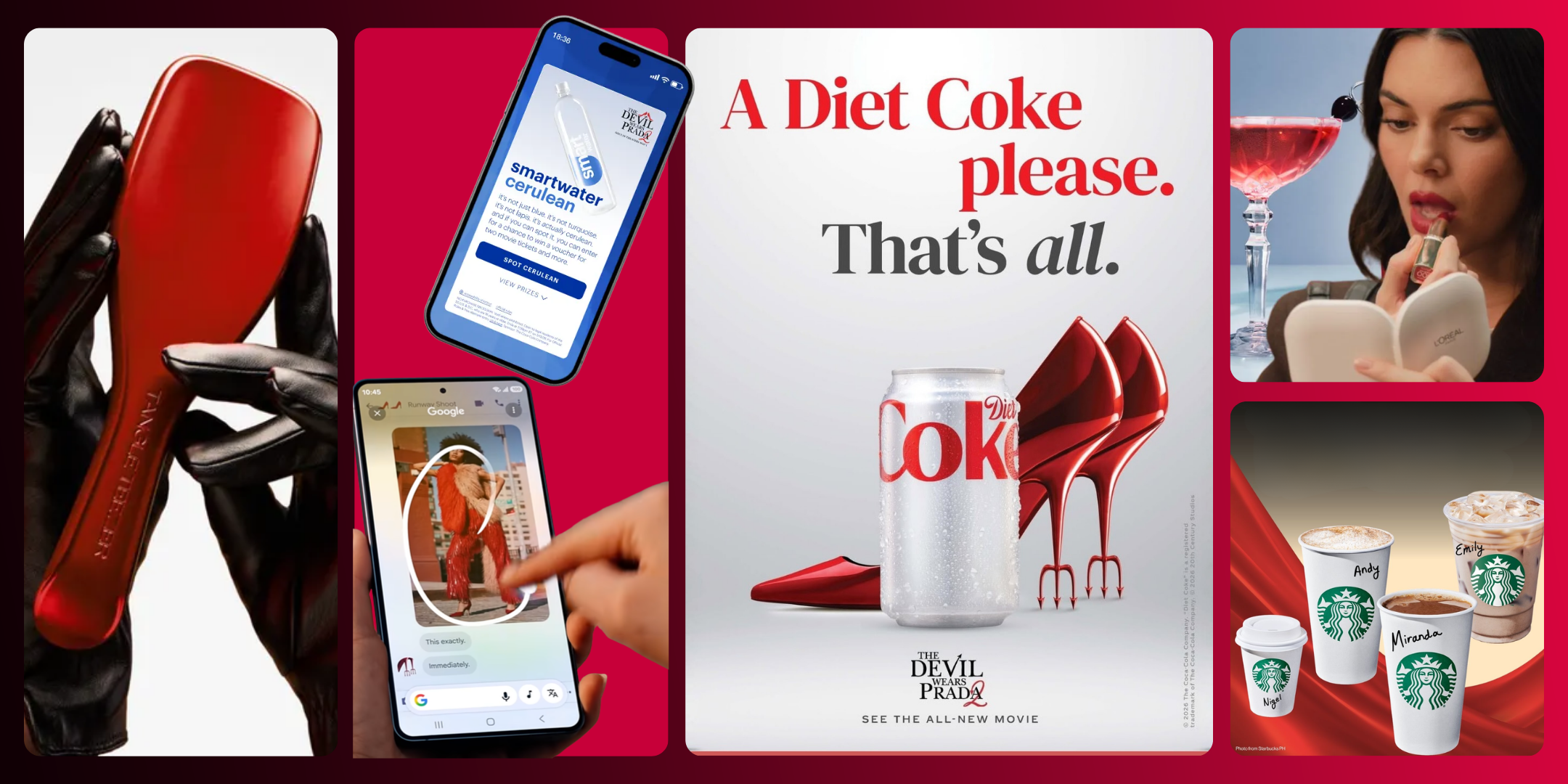
The Devil Wears Prada 2 opens this week and promises all the fan-favorites of the 2006 blockbuster and more—more Miranda-isms, more New York City, and definitely more fashion. Ahead of the movie opening, brand collaborations have multiplied, from Samsung mobile phones to L’Oreal Paris makeup. One would expect all these brands’ ads to play in the movie theater right before the lights dim, but the curious thing is—these brands might not even be in the movie.
OUR TAKE
Brands using movies to create cultural cache isn’t new but it is clear that brand marketing in movies has evolved from product placements to become an extended form of content and engagement. The latest slate of brand and movie marketing don’t just feature actors holding up products, but hero storytelling and feel like bite-sized extensions of the movie brought IRL. 2023’s Barbie broke the floodgates for this, with experiences such as AirBnB’s bookable Barbie’s Dreamhouse placing consumers right in the middle of the story.
Much of the more interesting marketing content tied to The Devil Wears Prada 2 goes beyond just product placement within the movie. Brands are now accessing more creative avenues to convey their message and integrate in people’s lives. Immersive storytelling and IYKYK nods to deep cuts can create stand-alone featurettes and open up other enticing parts of the world of the movie.
For behind-the-scenes footage of Runway magazine, look at the campaign from beauty brand Lancôme where actors Pauline Chalamet and Caleb Hearon reprise their movie roles to tackle a classic ‘impossible’ Miranda task. Coca-Cola brand Smartwater’s mini-game makes players search for the right shade of blue—a throwback to Miranda’s cerulean monologue in the first movie. Starbucks, which does physically appear in both movies, launched a real-life secret menu with the characters’ go-to orders and even brought back actor Adrian Grenier where he meta-comments on his hated character, Nate.
To partner with movies, brands now don’t have to be limited to the actual run-time of the movie, but can create these “pocket universes” that still feel true to the story and give audiences space within the world.
One example is not even a promotion for a movie, but accesses the legacy and shared moments of a decades-long cinematic collaboration between two veteran actors. To promote the Shogun Burger, McDonald’s Hong Kong created an entire music video with home-grown artists Louis Koo and Jessica Hsuan, channeling scenes from the multiple movies where they’ve played love interests. The campaign also included an Instagram Live session with the artists and collective trading cards riffing on their romantic scenes from movies.
At a time when demand for IRL experiences is heightened and cultural status comes from being in-the-know, brands have a real opportunity to leverage movies for their iconic scenes, characters or IYKYK moments to build their own cultural capital within the movie hype cycle. This is especially so for films with a rich history (easy for sequels, remakes and franchises, which seem to be the norm in Hollywood today) where core fans are eager for more content and experiences to get closer to the movie-world, and it doesn’t hurt that cinema attendance is on the rise with Gen Zs, especially in APAC.
Fax, No Printer*
For those of you born before 1997, ‘fax, no printer‘ is Gen Z speak for ‘undeniable facts I agree with’
Marc Jacobs just launched The Scene, the first installment of a new ongoing series. But what format does it take?
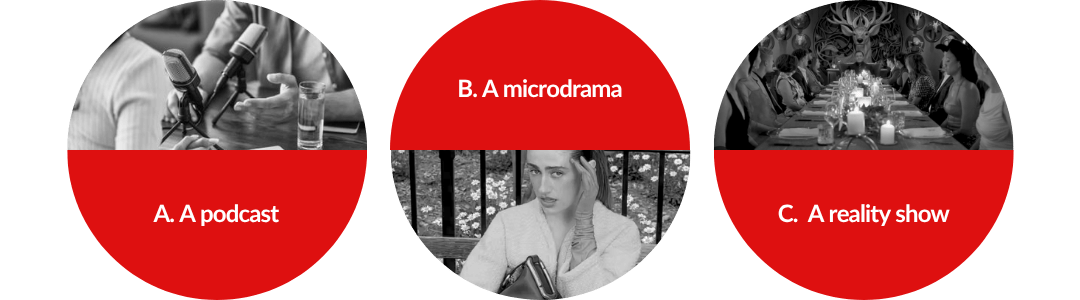
Scroll to the end of the newsletter for the correct answer!
Before You Leave
This Week's Trivia Answer
B. A microdrama
Marc Jacobs just launched The Scene, a scripted microdrama written by and starring I Love LA’s Rachel Sennott who appears alongside the Scene Bag, a piece from the brand’s pre-fall collection. The first installment in an ongoing series, it suggests that Marc Jacobs is transitioning from advertiser to studio.
Since we first flagged microdramas as something to watch over a year ago, the genre has exploded beyond the . In 2025, ReelShort was downloaded 38 million times on Apple’s US App Store – that’s more than Netflix. Studios are racing to enter the SEA microdrama market (see ABS-CBN), while the seventh season of SupermodelMe is being reformatted for FlareFlow with Nippon Paint and Shopee as sponsors.
Microdrama audiences skew heavily female, with many attracted to the genre’s romance and fantasy-heavy content. The format itself — episodes short enough to watch while the laundry runs — appeals to viewers whose attention comes in pockets. And serialization means people come back for the next episode, meaning this is a fundamentally different proposition from a Reel.
AI is accelerating microdrama production. Singapore studio Edenstone produced sci-fi series Spore Fall with a team of 11 using AI while in China the technology is helping to churn out around 470 new titles per day. A UK-based platform used AI to reformat Charlie Chaplin’s The Kid for vertical viewing, opening up new libraries of content and a growing ecosystem for brands to step into.
What makes this interesting for marketers is the variety of entry points. Marc Jacobs is producing original content centered around a hero piece. Nippon Paint is sponsoring. Product placement inside third-party series is another option. Few formats provide an audience that actively wants to know what happens next. So how will you write yourself in?
🚀 Over and Out!
Pop culture insights are better when shared. Subscribe, forward this on, or share the love on social media. Thanks for reading!
Your Culture Mavens,
Angela, Twila, Crystal, Helena Teri, & Vicki